

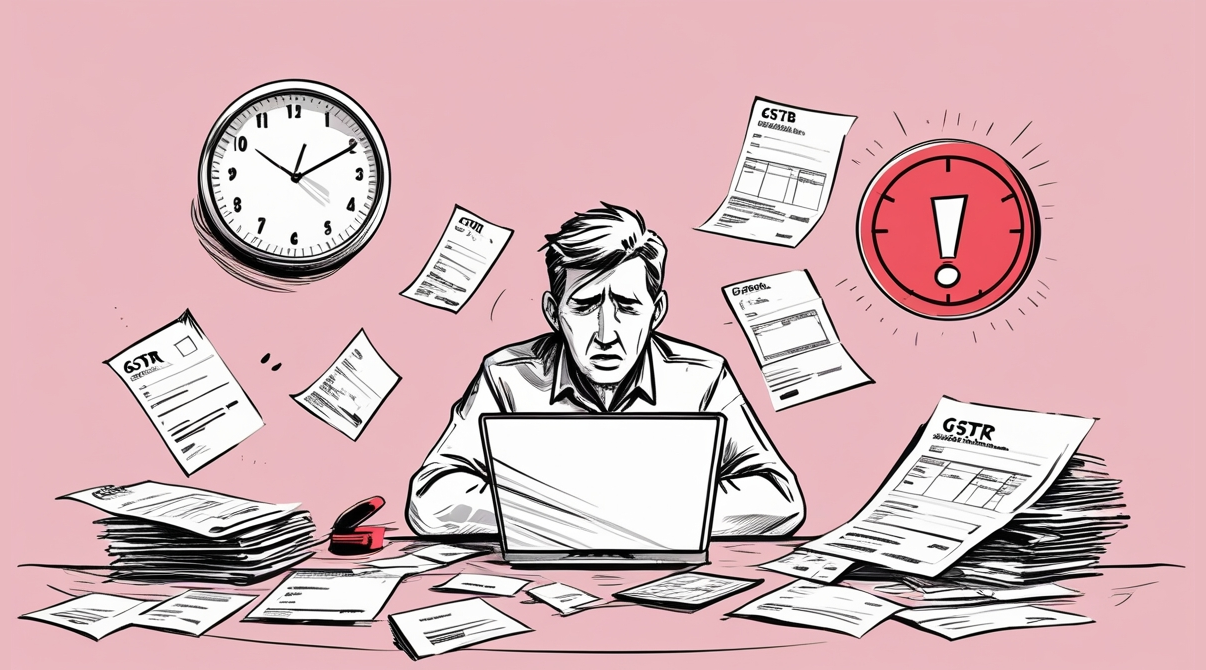
Filing Goods and Services Tax (GST) returns can feel like navigating a maze. Deadlines loom, data piles up, and even a small mistake can mean penalties. While large chains rely on Enterprise Resource Planning (ERP) systems to guide them smoothly through this process, many independent retailers still rely on spreadsheets, manual data entry, or disconnected accounting tools. The result: 74% of these retailers overlook key steps that put their GST compliance and cash flow at risk. Mastering ERP GST Return Filing is the key to escaping this panic. This article will explore what most retailers miss and how an ERP system fills those critical gaps.
In this article, we’ll explore:
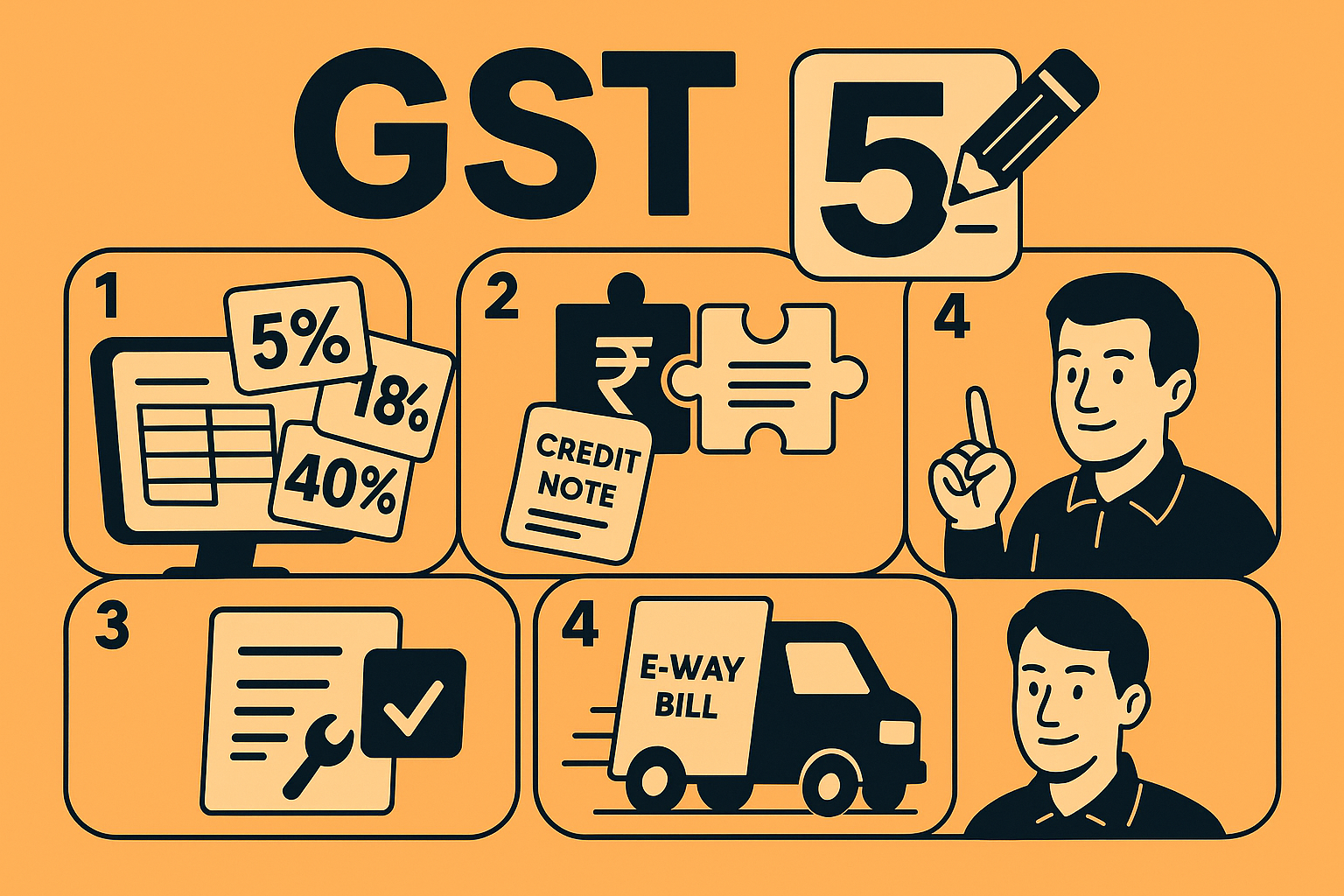

- The stakes of GST compliance
- What most retailers miss without an ERP
- Why these gaps matter
- How an ERP system fills those gaps
- A real-world example
- A practical checklist for retailers
1. The Stakes of GST Compliance
GST replaced many indirect taxes with a single, unified levy. For retailers, it means:
- Monthly or quarterly filings of Form GSTR-1 (sales) and GSTR-3B (summary returns).
- Accurate matching of outward supplies (sales) and inward supplies (purchases).
- Timely payment of tax liabilities.
- Maintenance of audit-ready records for up to six years.
Miss a deadline or report incorrect figures, and you face interest charges, late fees, or even show-cause notices. More than fines, errors can harm your reputation with suppliers, customers, and tax authorities. By leveraging an ERP, GST filing becomes a routine, automated task, demonstrating the power of ERP GST return filing for compliance.
2. What 74% of Retailers Miss Without an ERP GST Return Filing
A recent survey of small and mid-size retailers found that nearly three in four lack one or more critical elements when preparing GST returns. Here is what they most often overlook:
- Automated Reconciliation of Input Tax Credit (ITC)
- Gap: Manually matching vendor invoices to purchase entries.
- Impact: Over-claimed or under-claimed credits lead to tax shortfalls or lost benefits.
- Gap: Manually matching vendor invoices to purchase entries.
- Real-Time Data Capture
- Gap: Sales recorded in cash registers or point-of-sale (POS) systems do not flow directly into accounting ledgers.
- Impact: Last-minute data dumps increase the risk of missing invoices or duplicate entries.
- Gap: Sales recorded in cash registers or point-of-sale (POS) systems do not flow directly into accounting ledgers.
- Cross-State Compliance Checks
- Gap: Different tax rates and rules for inter-state supplies are handled manually.
- Impact: Misapplication of Integrated GST (IGST) versus Central (CGST) and State GST (SGST) can trigger mismatch notices.
- Gap: Different tax rates and rules for inter-state supplies are handled manually.
- Credit Note and Debit Note Tracking
- Gap: Adjustments issued to customers or received from vendors are not linked to original invoices.
- Impact: Incomplete returns and reconciliation mismatches.
- Gap: Adjustments issued to customers or received from vendors are not linked to original invoices.
- Audit Trail and Change Logs
- Gap: No record of who edited or approved tax-related entries.
- Impact: Difficulties during statutory audits and risk of disputes.
- Gap: No record of who edited or approved tax-related entries.
- Due-Date Alerts and Workflow
- Gap: No systematic reminders or task assignments for return preparation.
- Impact: Missed filings and last-minute rush leads to mistakes.
- Gap: No systematic reminders or task assignments for return preparation.
- Input Invoice Validation
- Gap: Invoices from suppliers are accepted at face value without checking for GSTIN validity or common errors.
- Impact: Invalid credits and pushbacks from tax authorities.
- Gap: Invoices from suppliers are accepted at face value without checking for GSTIN validity or common errors.
3. Why These Gaps Matter
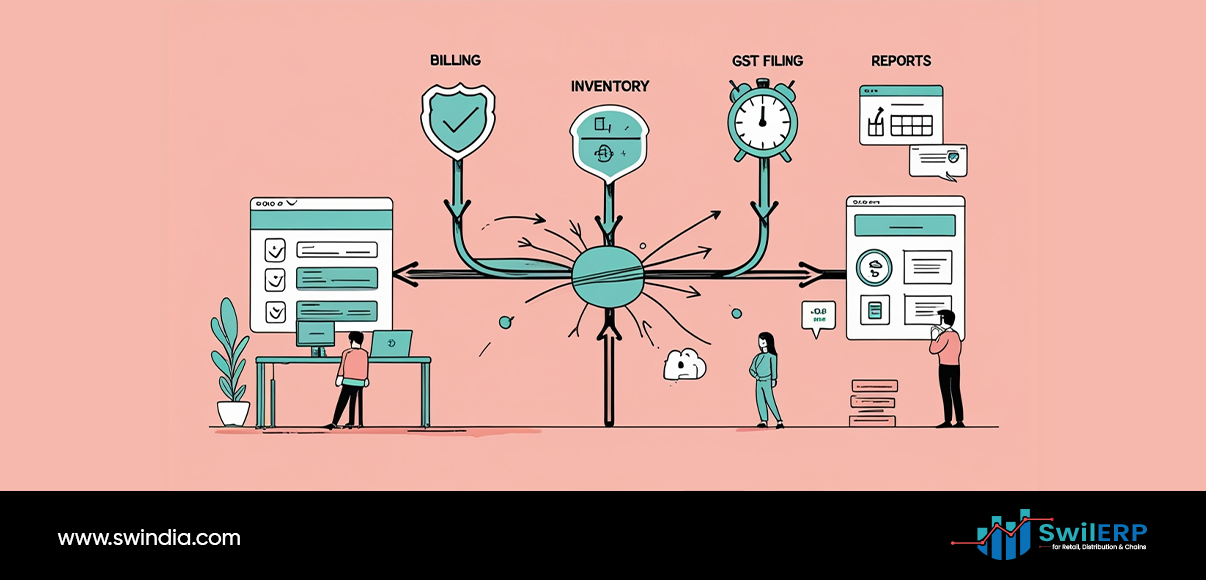
The conclusion is clear: ERP GST return filing can transform a stressful quarterly chore into a manageable process, reducing errors and saving significant time. Each of these oversights can lead to real costs:
- Financial Penalties: Late filing of GSTR-3B attracts an interest rate of 18% per annum on the tax due, plus a late fee of ₹ 50 per day (₹ 25 each for CGST and SGST), capped at ₹ 5,000.
- Lost Cash Flow: Under-claimed ITC means your net tax outgo rises, reducing funds available for operations.
- Audit Risk: Without clear audit trails, explaining or correcting errors during a tax inspection becomes time-consuming and stressful.
- Operational Strain: Manual work consumes staff hours that could be spent on serving customers or growing the business.
4. How an ERP System Fills Those Gaps
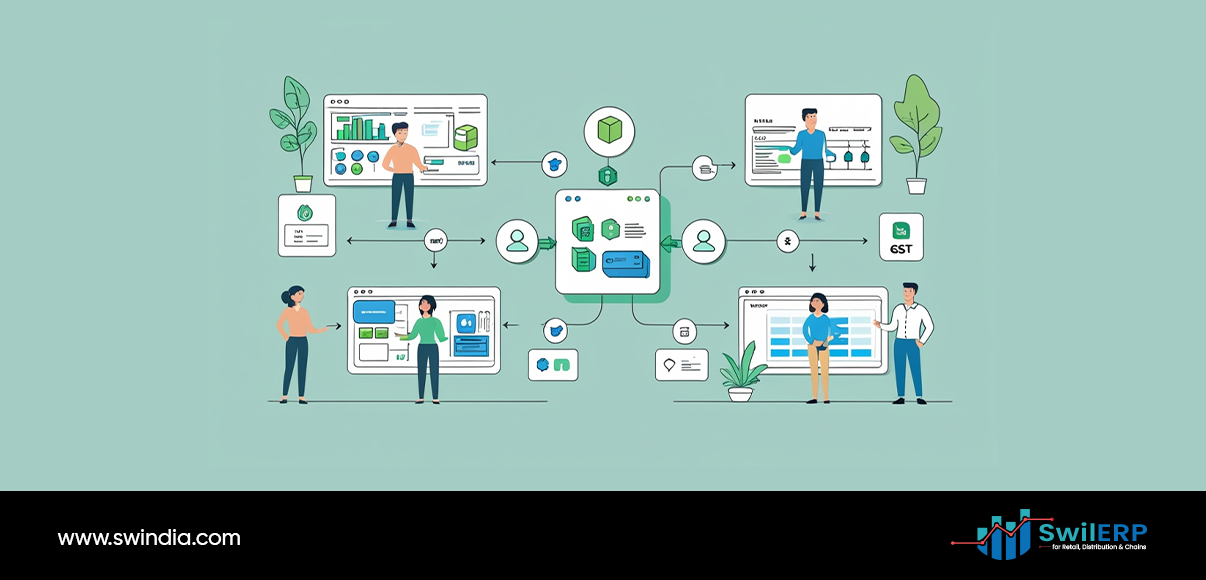
An ERP brings together your sales, purchases, inventory, accounting, and compliance processes on a single platform. Here’s how it addresses each key gap:
| Gap | ERP Feature |
| ITC Reconciliation | Automatic matching of purchase invoices with GSTR-2A data; alerts for mismatches. |
| Real-Time Data Capture | Direct integration between POS and accounting modules; instant posting of transactions. |
| Cross-State Compliance | Built-in tax engine that applies correct rates (IGST/CGST/SGST) based on locations. |
| Credit/Debit Note Tracking | Linked document flow ensures every adjustment links to its original invoice. |
| Audit Trail | Comprehensive logs showing who created, modified, or approved each transaction. |
| Due-Date Alerts | Workflow engine sends reminders and assigns tasks to responsible users. |
| Invoice Validation | GSTIN format checks, supplier verification, and error flags before posting. |
Let’s look at a few in more detail.
A. Automatic ITC Reconciliation
With an ERP, every purchase entry is compared against your auto-populated GSTR-2A or GSTR-2B. If a vendor’s invoice is missing from the government portal or has mismatched details, the system flags it. You can then query the vendor or adjust your filing before deadlines. Integrated reconciliation, directly linking sales and purchase data, is a powerful feature for simplifying ERP GST return filing and maximizing ITC claims. Implementing an ERP GST return filing solution means fewer penalties, faster filings, and higher Input Tax Credit (ITC) claims.
B. Real-Time POS Integration
Instead of exporting daily sales data and manually uploading it into accounting software, an ERP captures each sale the moment it happens. That means your GST returns reflect up-to-the-minute sales figures, reducing last-minute data crunching.
C. Built-in Tax Engine
ERPs include a tax engine that knows all current GST rates and rules. When you create an order:
- The system identifies whether it is intra-state or inter-state.
- It applies the correct mix of CGST, SGST, or IGST.
- It calculates the tax amount automatically.
This removes the need for manual rate lookups and reduces human error.
5. Real-World Example: The Urban Gift Shop
Background
Urban Gift Shop operates two outlets in different states. For years, they tracked sales in their POS and purchases in manual ledgers. Every quarter, they spent five days reconciling and filing returns. They discovered late fees totalling ₹ 30,000 in one year alone.
Solution
They implemented an ERP system with full tax and compliance modules.
Key Changes
- Instant Data Flow: Sales from both stores posted automatically to the return-preparation module.
- ITC Alerts: The system flagged 12% of supplier invoices as missing in GSTR-2A. They followed up with vendors and claimed additional credits worth ₹ 150,000.
- Workflow Reminders: Four-week, one-week, and one-day reminders cut last-minute rush.
- Audit Trail: Each entry showed the user, date, and time, simplifying monthly reviews.
Results
- Filing time reduced from five days to one day per quarter.
- Late-fee savings of ₹ 30,000 annually.
- Extra ITC claims of ₹ 150,000 recovered.
- Better visibility into cash flow and liabilities.
6. A Practical Checklist for Retailers
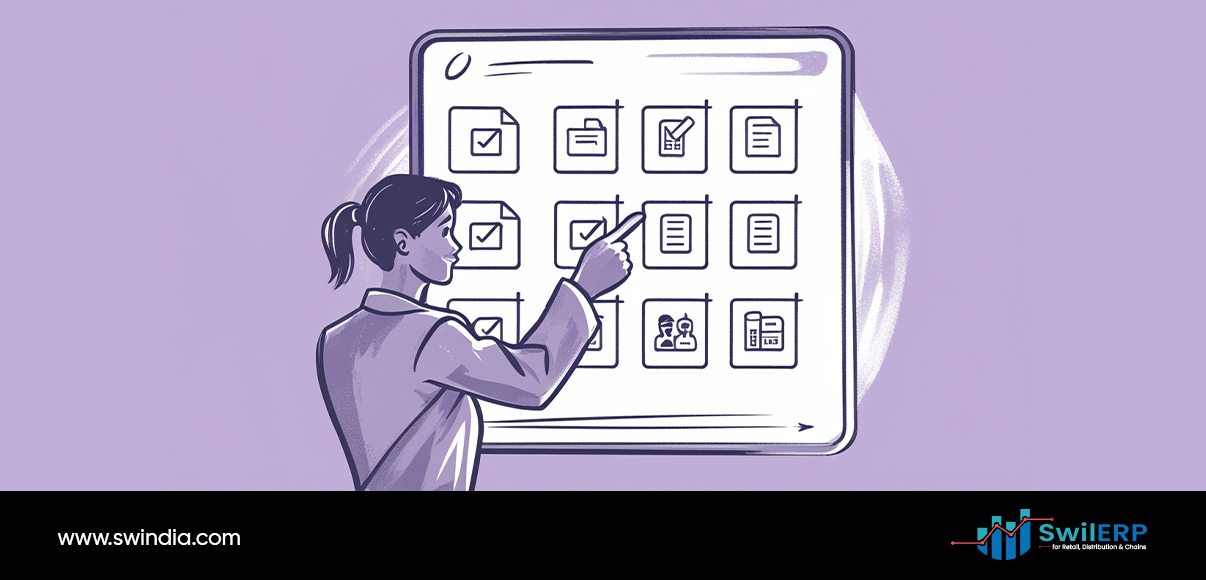
If you handle GST filing manually or with disconnected tools, use this checklist to assess your readiness:
- Do you match every purchase invoice to GSTR-2A/2B?
- If not, you may be missing credits or over-claiming.
- If not, you may be missing credits or over-claiming.
- Are sales captured in real time in your accounting records?
- If data only moves at month-end, you risk late adjustments.
- If data only moves at month-end, you risk late adjustments.
- Can your system differentiate CGST, SGST, and IGST automatically?
- Manual rate selection invites errors.
- Manual rate selection invites errors.
- Are credit and debit notes linked to their original invoices?
- Unlinked adjustments lead to reconciliation gaps.
- Unlinked adjustments lead to reconciliation gaps.
- Do you have clear logs of who edited or approved tax entries?
- Lack of audit trail complicates statutory reviews.
- Lack of audit trail complicates statutory reviews.
- Does someone receive automatic due-date reminders?
- Relying on memory or shared calendars can fail.
- Relying on memory or shared calendars can fail.
- Does your tool validate GSTINs and flag common invoice errors?
- Invalid data can block credits and trigger notices.
- Invalid data can block credits and trigger notices.
If you answer “no” to one or more of these questions, consider an ERP or a GST-focused compliance module to close the gap. Even small investments in automation can reduce penalties, recover credits, and save hundreds of staff hours each year.
Conclusion
GST filing need not be a source of panic each quarter. While 74% of retailers overlook critical steps without an ERP, you can break that pattern by adopting a system that brings together your sales, purchases, tax rules, and reminders in one place. The result is:
- Fewer errors and late fees
- Faster filings with less staff effort
- Higher ITC claims through timely reconciliation
- Clear audit trails that satisfy regulators
Start by auditing your current process against the checklist above. Identify your biggest gaps, then explore ERP or compliance tools that fit your budget and scale. With the right system in place, GST returns become a routine task rather than a source of stress.
Have you experienced GST filing challenges? Share your tips or questions in the comments below.