


You have a reliable distributor.
You have a loyal network of retailers.
You even have a consistent sales team.
But you’re still collecting orders over calls, on WhatsApp, or worse- through handwritten notes.


On paper, everything looks “manageable.” But inside your business, things are leaking quietly.
Let’s look at what manual order collection is really costing you and how a connected system like SwilERP fixes it without extra headcount or long learning curves.
The First Leak: The Hidden Drain of Manual Order Collection

Most distributors or wholesalers think they have order-taking under control. A salesman calls the store, jots down the order, shares it with someone at HO, and someone keys it into the software.
But let’s trace that one order:
- The salesman spends 5–10 minutes per order
- He shares it via photo, message, or call
- Someone at the office retypes that into SwilERP manually
- Errors? They get noticed only when the invoice is printed
- Any stock unavailability? Another call, another edit
- Orders get punched late or in wrong sequence
Each order costs 15–20 minutes of work. Multiply that by 100 orders a day—and you’re leaking hours of your team’s time every single day.
The Bigger Problem: Errors That Multiply
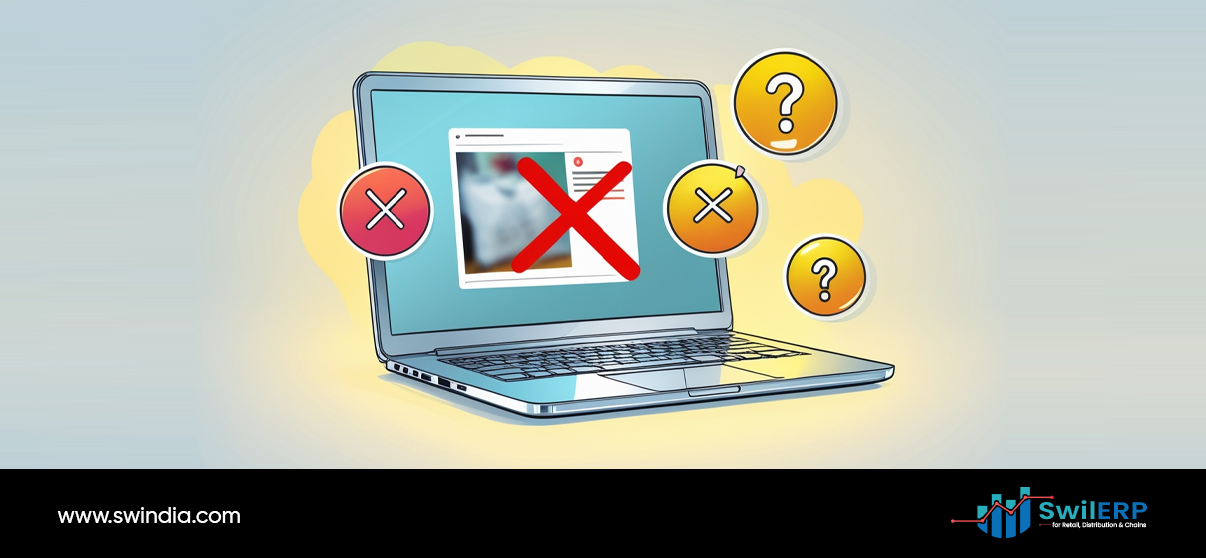
Here are some real issues distribution businesses face due to manual order flow:
- Wrong product code keyed in due to miscommunication
- Rate mismatches between field order and billing rate
- Out-of-stock items still getting billed
- Quantity confusion (box vs strip, carton vs piece)
- Duplicate orders when one is entered twice by mistake
These errors don’t just affect billing. They affect:
- Dispatch accuracy
- Customer trust
- Your return rate
- Your cash flow
And most of them happen before the invoice is even generated.
Manual Order Collection Breaks Visibility

Imagine trying to answer these questions in your current system:
- Which retailers haven’t ordered in the last 15 days?
- Which salesman’s orders are highest in value this week?
- How many times has product X been asked for but not supplied?
- How many orders are delayed because of stock mismatch?
If you’re still pulling this data from WhatsApp messages, Excel sheets, or calls, your insights are only as accurate as your memory.
SwilERP changes that by bringing real-time order data directly into your system—from retailers, sales apps, or online portals.
What a Modern Order Process Looks Like
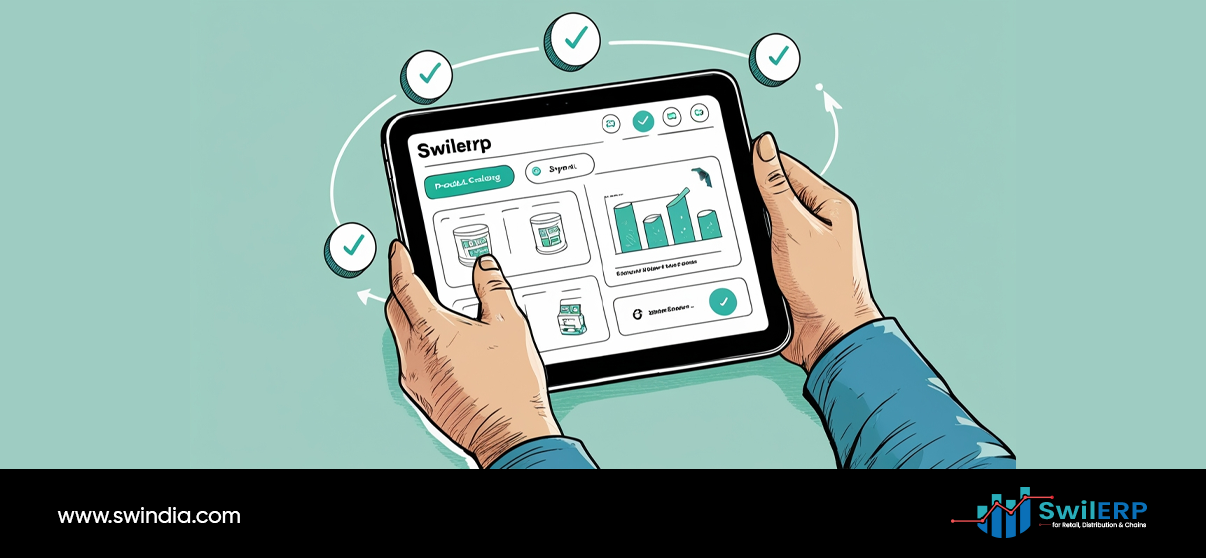
Here’s what happens when you’re using SwilERP with connected tools like:
- Retailer App/Portal (e.g., SwilMart)
- Salesman App (for field agents)
- Back-office ERP
The flow:
- Retailer or salesman enters the order directly into the app
- The order syncs with SwilERP in real time
- System auto-checks stock availability
- Rate, discounts, and schemes are applied correctly
- Dispatch team gets auto-generated picklist
- Delivery is tracked via Swil Dispatch or linked tools
And the best part? No one retypes anything. No calls. No photos. No human bottlenecks.
The Real Hidden Cost: Human Dependency

What if your sales guy is on leave?
What if your office staff is sick?
What if the order slip gets lost before reaching the system?
Manual workflows mean your business is always dependent on people remembering things.
Digital order collection isn’t about going “tech-first”—it’s about creating a memory your team can trust.
SwilERP doesn’t forget to apply schemes.
SwilERP doesn’t skip items while writing orders.
SwilERP doesn’t delay the invoice because someone’s on leave.
What You Can Do Today
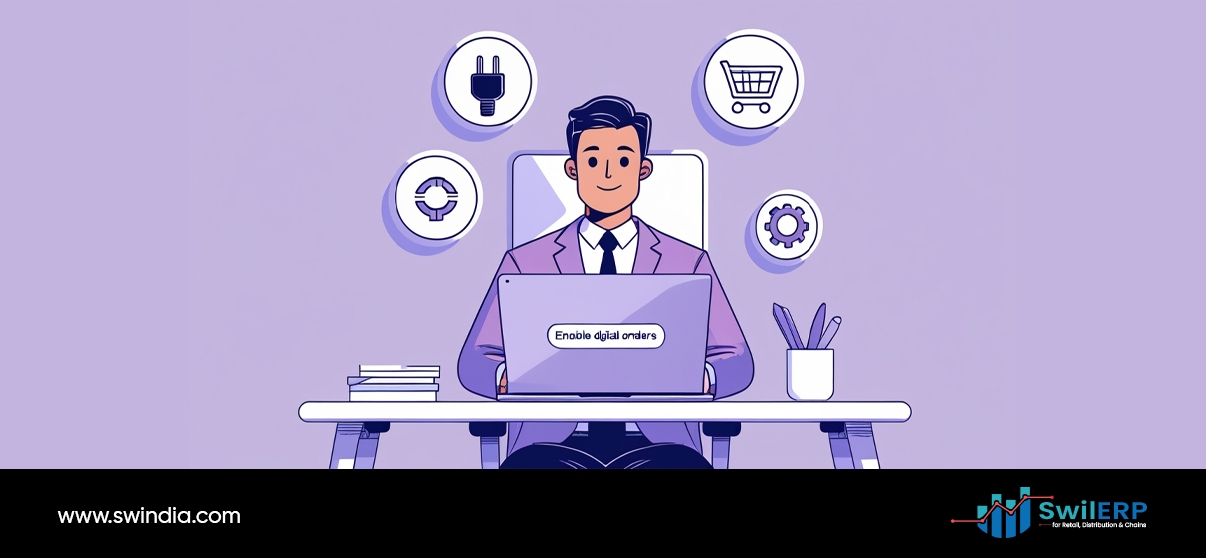
If you’re already using SwilERP, start with:
✅ Setting up salesmen or retailers with the Swil Order App or SwilMart
✅ Linking order flow directly to ERP using the integration module
✅ Auto-validating order fields—quantity, rate, scheme—based on master settings
✅ Using the “Pending Order Report” to track what’s stuck and why
✅ Implementing dispatch workflow via Swil Dispatch to manage movement
Each of these steps can cut hours of daily manual work—and reduce the “unknowns” that slow your business down.
Final Thought: Manual is Not Personal
Some owners say:
“We like the personal touch of taking orders ourselves.”
But let’s be honest: What feels personal can quickly become chaotic.
And when an order goes wrong, the customer won’t remember the ‘nice call’—they’ll remember the mistake.
If you’re already using SwilERP for billing, you already have the infrastructure.
It’s time to stop leaking time, money, and trust just to “stay comfortable.”
Make your order process as smart as your billing.
Because growth doesn’t wait for handwritten notes.





The hidden costs of manual order collection are so real. Beyond the wasted time, the errors that slip through the cracks can cause bigger issues downstream. I can see how automating that process would not only save time but also improve accuracy and customer satisfaction.