

Taking your business online is no longer optional—it’s expected. But once you decide to go digital, the question becomes, how should you do it? Should you list your products on a well-known marketplace? Or should you create your own branded ordering portal? Understanding the key differences in SwilMart vs Marketplaces is crucial for this decision.
The goal is simple: help you choose the right platform that fits your brand, your customers, and your long-term goals. In this blog, we compare SwilMart, an ERP-connected B2B/B2C ordering portal, with generic online marketplaces.


What Is SwilMart?
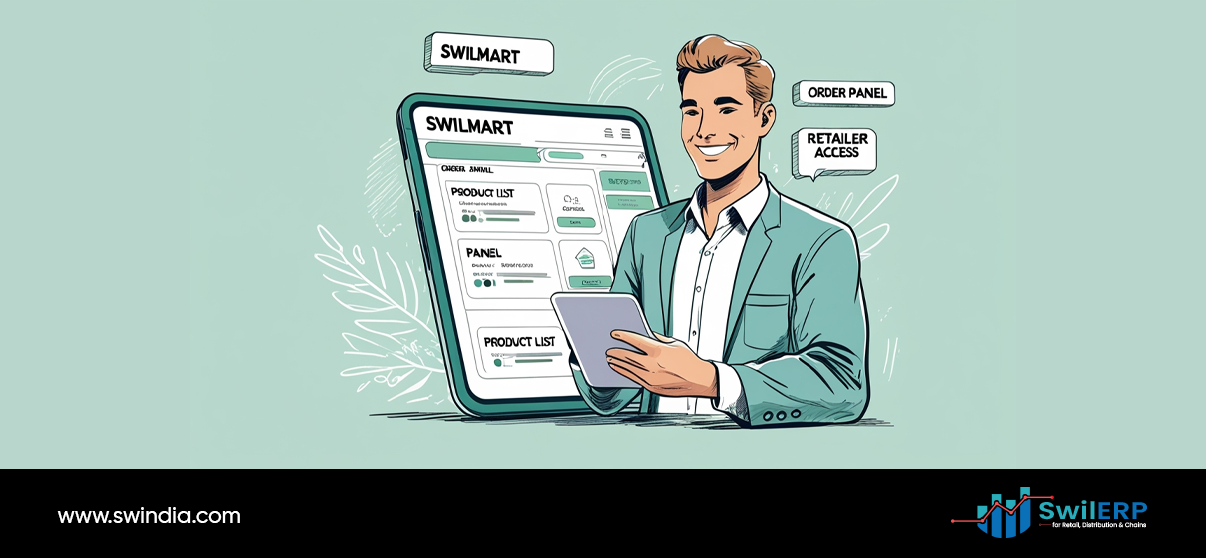
SwilMart is a digital order-taking platform designed for businesses already using SwilERP. It lets your retailers or customers:
- Browse your live catalog
- Place orders online
- Track deliveries and payments
- Download reports and past invoices
Most importantly, it connects directly with your ERP, which means no extra setup, sync, or manual order entry.
What Are Generic Marketplaces?
Generic marketplaces are platforms like Amazon, Flipkart, IndiaMART, or industry-specific B2B platforms where businesses can list their products.
- They provide wide visibility
- They manage payments and logistics
- They often have built-in marketing tools
But they also come with fees, rules, and shared control.
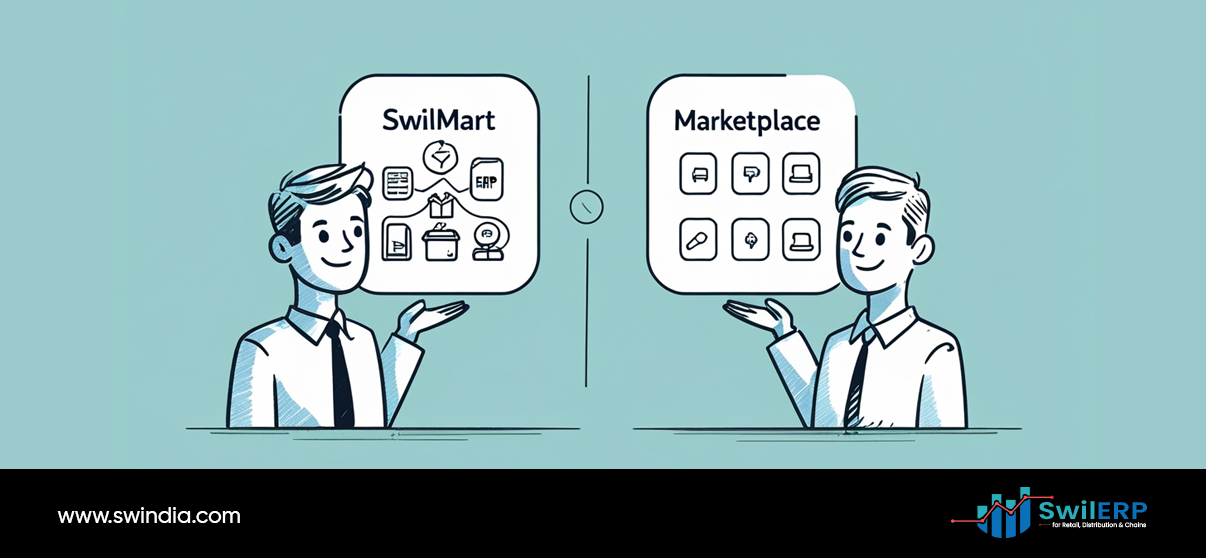
Comparison: SwilMart vs Marketplaces
| Feature | SwilMart | Generic Marketplaces |
| Brand Control | Fully branded portal | Shared space with other sellers |
| Customer Data Ownership | You own all customer data | Limited access to buyer info |
| Integration with ERP | Direct sync with SwilERP | Manual sync or API setup needed |
| Order Processing | Directly into your ERP | Managed separately |
| Login & Access | OTP-based secure access | Open browsing |
| Financial Documents | Customers can download ledgers, notes | Not available |
| Payment Handling | You decide payment methods | Controlled by platform |
| Commission | No commission | Marketplace charges apply |
| SEO and Visibility | Basic SEO settings in the admin panel | Platform-managed marketing |
| Customer Experience | Tailored to your pricing, stock, and rules | Standard checkout & layout |
When Should You Choose a Marketplace?

Marketplaces are useful if you:
- Want to reach a wide audience quickly
- Sell B2C-focused products (like cosmetics, apparel, electronics)
- Have the capacity to meet marketplace standards (returns, shipping, packaging)
- Don’t mind paying commissions or sharing control
For businesses just starting with e-commerce, a marketplace can offer a shortcut to visibility. However, it may not provide the flexibility or control that long-term brand building needs.
When Is SwilMart a Better Fit?
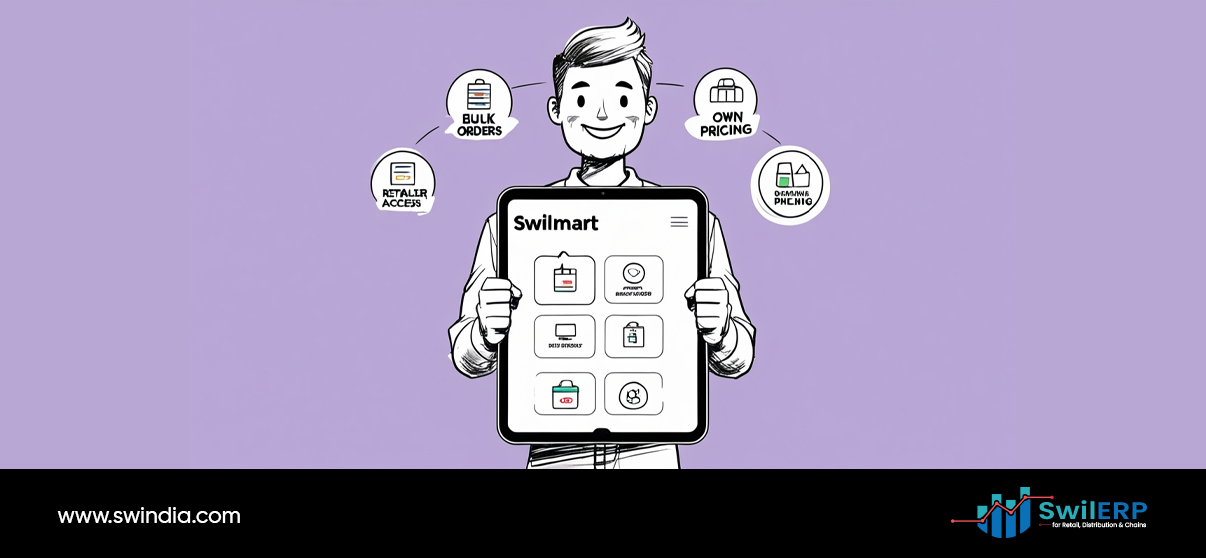
SwilMart makes more sense when:
- You already use SwilERP
- Your customers are existing retailers or B2B buyers
- You want your portal under your brand name
- You want to show different prices to different customers
- You want financial documents to be available to customers, 24×7
- You don’t want to pay commission on every order
SwilMart isn’t just another way to take orders—it becomes a part of your existing operations.
Real-World Example: B2B Distributor
Let’s say you are a wholesale distributor supplying 200 retailers. You currently take orders on calls or WhatsApp.
If you go to a marketplace:
- You list your products, but may have to handle many end-consumer queries
- You may not be able to control who sees what prices
- You don’t get order reports or ledgers integrated with your ERP
If you use SwilMart:
- Your retailers can place orders anytime
- Each one sees only the prices and products assigned to them
- You get orders directly in SwilERP
- You maintain full control over product display, SEO, and payment rules
What About Customer Experience?
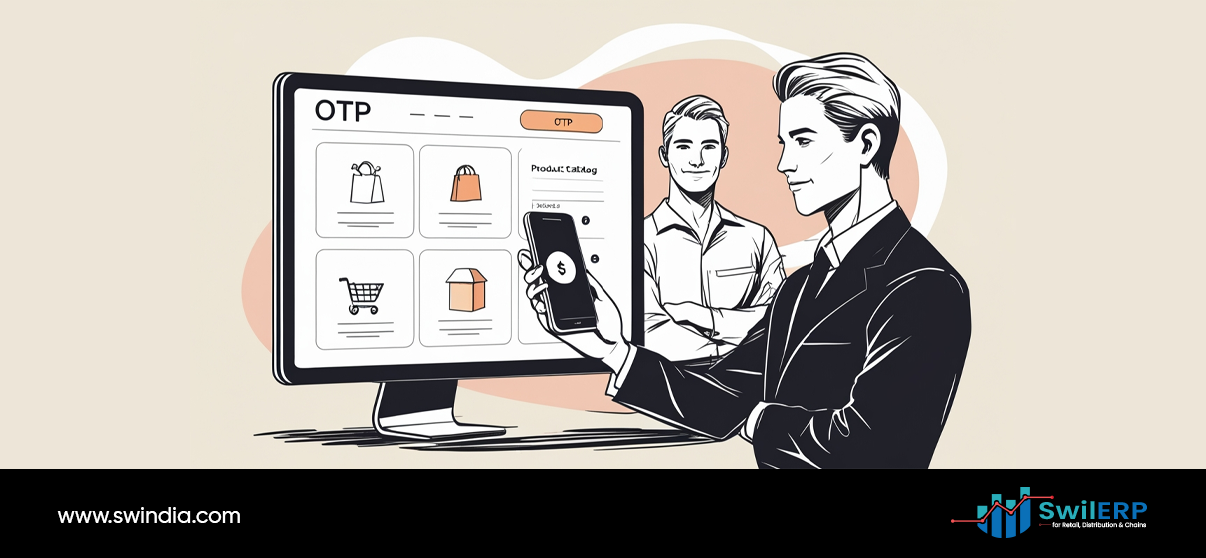
With marketplaces, your brand is one of many. You cannot control layout, presentation, or how your products are placed. You also cannot decide how returns or complaints are handled.
With SwilMart, the customer logs into their store. They see only your catalog, your offers, and your support contacts. It’s a more personal experience, especially in B2B, where relationships are long-term.
Cost Factor: One-Time Setup vs. Ongoing Commission
With SwilMart, you only pay a fixed yearly fee; no commission is charged on any order you receive. Once set up, it runs using your existing ERP.
Generic marketplaces charge on:
- Each order (a percentage cut)
- Promotional listings
- Subscription or renewal fees
Over time, these charges can reduce your profit margins and make you dependent on platform policies.
Future Flexibility

SwilMart is evolving. Features like WhatsApp ordering, Shopify frontend support, and delivery integrations are on the way.
You can even build your own custom frontend using SwilMart’s APIs, while the backend stays connected to your ERP. Marketplaces do not offer this level of flexibility.
Conclusion: Choose What Serves Your Goals
Generic marketplaces are good for reach. But SwilMart is built for control, trust, and long-term growth.
If you want to:
- Build your brand
- Retain customer relationships
- Avoid ongoing fees
- Give your customers a better ordering experience
…then SwilMart may be the better fit.
Both paths are valid, but the right choice depends on how you plan to grow.
Still deciding? Let us walk you through a demo and show you how SwilMart can work with your existing ERP setup.