


The impact of GST update is reshaping how retailers, wholesalers, and distributors operate under GST 2.0, the way they affect retailers, wholesalers, and distributors depends on how each of these players operates.
In this guide, we break down what the changes mean for each group, with practical steps to stay compliant and competitive.

Impact of GST Update on Retailers
1. Updating Point of Sale (POS) Systems
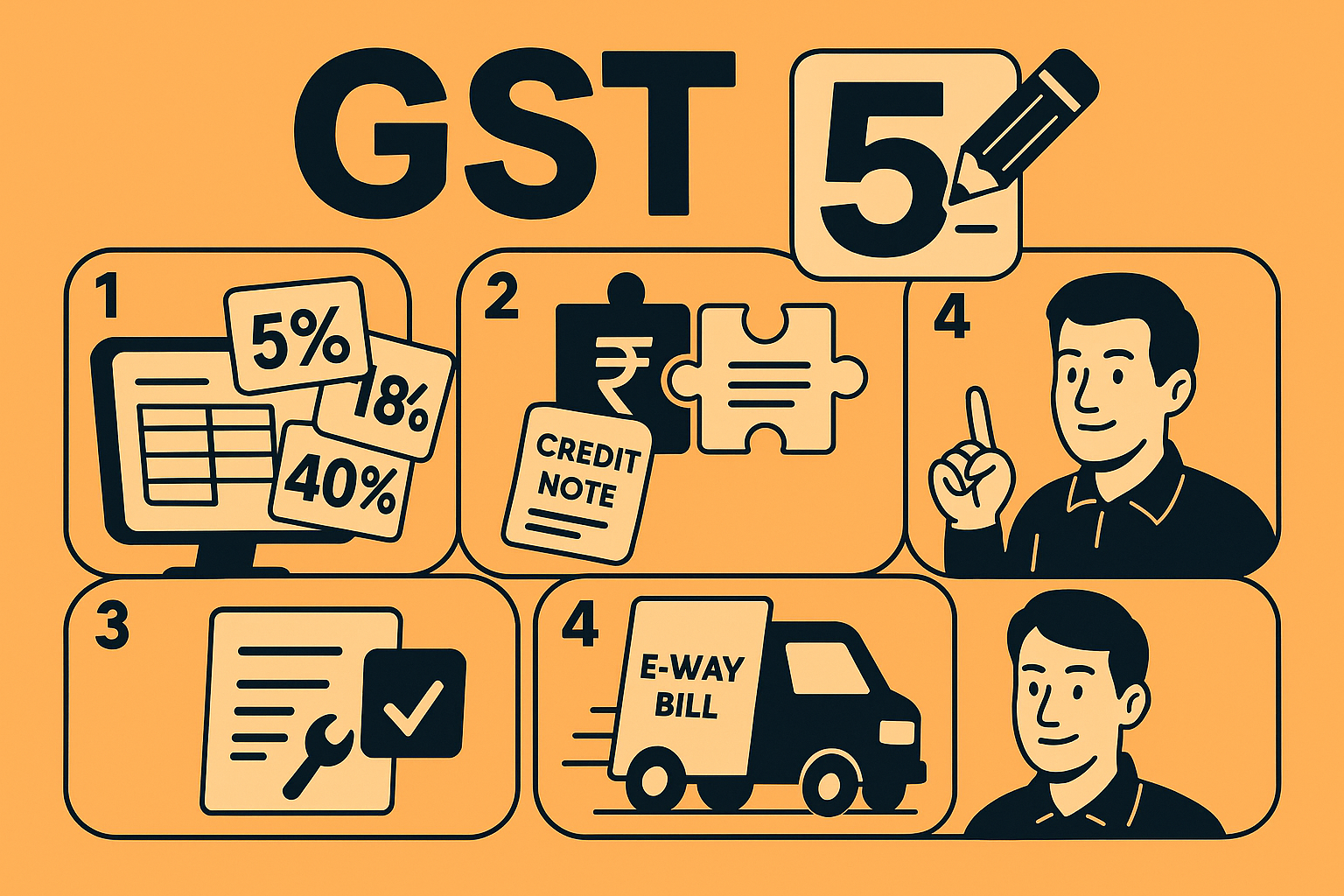
Retailers must immediately update POS tax mappings to reflect the new slabs. Billing mistakes at the counter can lead to compliance penalties and customer disputes.
- Configure HSN codes correctly in the POS.
- Train cashiers to identify new 40% slab items (like liquor or luxury goods).
- Add quick alerts for items that moved to 5% so you don’t miss out on customer goodwill when prices drop.
2. Shelf Labels and Customer Communication
Retailers must reprint shelf labels and update digital displays. In pharmacies and groceries, customer trust depends on transparent pricing.
👉 Display notices explaining reduced rates on essentials to build credibility.
3. Stock Handling and MRP Stickers
Old stock manufactured before the effective date can still be sold under transitional relief, but invoices must reflect the correct new rate. Always keep proof of batch dates for audits.
Impact of GST Update on Wholesalers
1. Price List Revision
Wholesalers need to issue revised dealer price lists that clearly show the new GST slabs. This prevents disputes with retailers.
- Share side-by-side comparisons of old vs. new effective prices.
- Highlight products that dropped to 5% as promotional opportunities.
2. Credit Notes and Discounts
Post-sale discounts must be handled carefully under GST 2.0.
👉 Wholesalers should link every credit note to its original invoice to keep ITC flows correct.
3. Dealer Relationships
Slab shifts can change margins. Wholesalers must renegotiate contracts, especially for products that jumped to 40%. Transparency with dealers is essential to maintain trust.
Impact of GST Update on Distributors
1. Order Management
Distributors handling large SKU ranges must re-map every product HSN and GST rate in their ERP. Missing even one SKU can create reconciliation mismatches.
2. E-Way Bills and Logistics
Higher-value slabs (40%) come with closer scrutiny on e-way bills. Distributors should tighten controls:
- Always link delivery challans to invoices.
- Run daily reports for unbilled dispatches.
3. Margin and Stocking Decisions
- Products moving down to 5% can boost demand — distributors must be ready with higher stock.
- Products at 40% may see reduced sales volume — avoid carrying excess high-cost inventory.
Industry Example
For instance, a mid-sized grocery chain reported that updating POS systems and shelf labels immediately after the GST update helped them avoid billing disputes and customer complaints. On the other hand, a regional distributor delayed re-mapping SKUs in their ERP and faced stock mismatches during audits. These contrasting experiences highlight why rapid adoption of GST 2.0 measures is not just about compliance—it directly affects customer trust, operational efficiency, and long-term competitiveness.
Shared Challenges Across All Groups
- HSN Master Updates: Every player must re-map HSN codes correctly.
- Returns Filing: Reconcile GSTR-1 vs. sales register and GSTR-2B vs. purchase register daily in the first month.
- Staff Training: Billing staff, warehouse teams, and accounts teams must be trained together so operational gaps don’t create compliance failures.
Practical Action Plan
- Retailers: Update POS, relabel shelves, train counters.
- Wholesalers: Issue new dealer price lists, manage credit notes carefully, renegotiate contracts.
- Distributors: Re-map all SKUs, tighten e-way bill links, adjust stocking strategies.
Key Takeaway
The GST 2.0 update reshapes how retailers, wholesalers, and distributors manage pricing, stock, and compliance. Each segment faces unique challenges, but the common theme is clear:
👉 Systems must be updated, and people must be trained.
Failing to adapt quickly risks penalties, customer dissatisfaction, and stock imbalances. Acting now ensures smoother operations in the months ahead.