
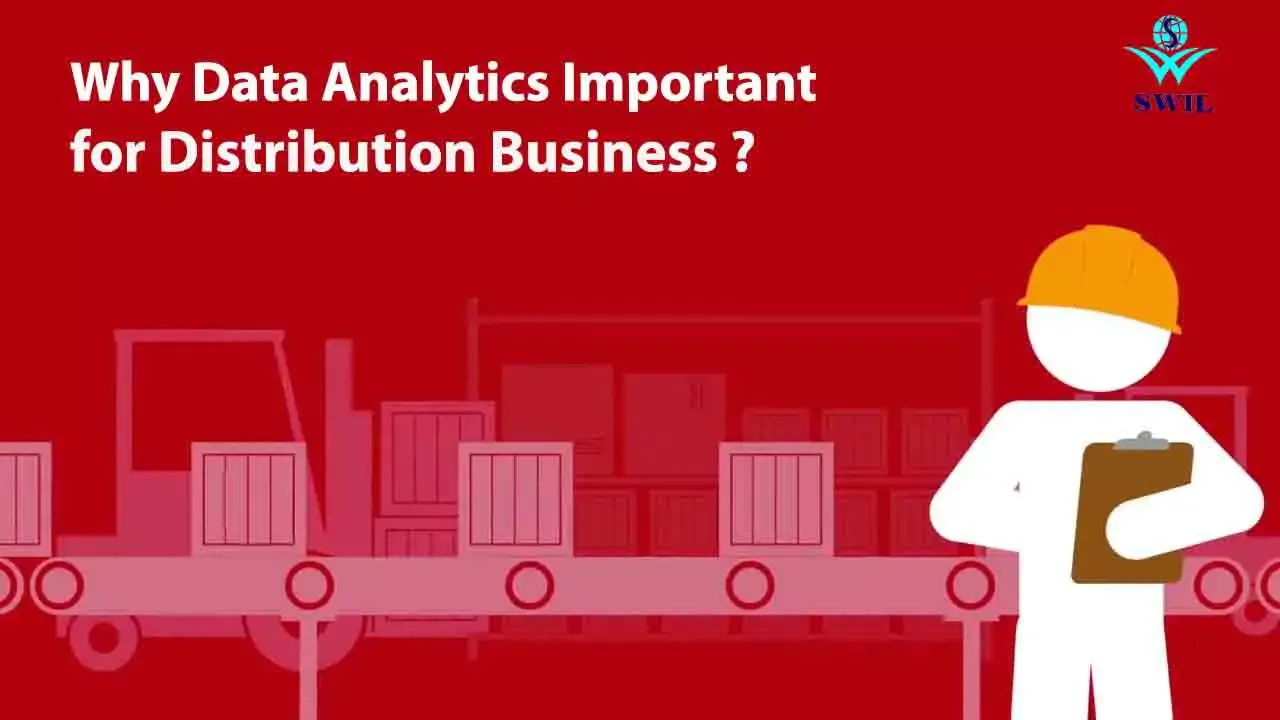
With the increase in retailer demand, predictive analysis can play an important role in the movement of goods within the organization's supply concerns. Wholesalers and distributors need to identify organizational requirements and continue with changes in the industry.
The distribution business is primarily concerned with the vast sets of data collected that affect customer needs, changing market forecasts, and competitive analysis. Its management is essential for financial success and sustainability. Thus, predictive analysis is essential for effective management of the processes involved in the entire distribution business. The effective analysis gives you the right logic to get the right customer at the right time.
What is Predictive Analytics and Why Does It Matter?
Predictive analytics is an advanced form of analytics that helps organizations create valuable ideas for upcoming business events. It provides future predictions by analyzing current data based on data mining, statistics, statistical modeling, machine learning, and artificial intelligence.
Predictive analytics provides the best organizational assessment of what will happen in the near future and makes the business activities for future prospects. It greatly helps businesses such as finance, healthcare, retail, hospitality, pharmaceuticals, automotive, aerospace, and manufacturing. It is useful for-
- Fraud detection by improving error detection patterns
- Optimizing marketing campaigns by determining customer responses or purchases and helps businesses attract, retain, and grow their most profitable customers.
- Improving operations by forecast future events and enables organizations to function more efficiently.
- Reducing risk by identifying defaults on purchases and other business functions.
Future of Wholesale Distribution
Digitization is now part of a wholesale distribution business, a requirement for success to transform your business and keep your business competitive. Predictive analytics helps the distribution business to forecast future customer needs. Also, it predicts potential new customers, markets, and segments and their impact on the organization. The importance of predictive analytics is growing in the wholesale industry. A wholesaler with predictive analytics processes and technology will now be able to forecast risk factors, customer profitability, and possible restructuring of the customer-level distribution network.

5 Benefits of Predictive Analytics Applied in Distribution Business
In this blog, we are highlighting some potential benefits that a wholesale business can extract from modern-day data analytics.
1. Identifying and Estimating Customer Profitability
Gathering customer data to gain profitability is a crucial task for distributors/wholesalers. It is next to impossible task to find out which clients are high-profit makers and which are not. Predictive analytics helps you to identify those customers with the help of the right technology and allows you to make a plan for encouraging profits.
2. Better Results through Marketing Strategies/Campaigns
A predictive product helps the distribution business by forecasting risk factors on customers who are more likely to buy by customers. It provides successful marketing campaigns for on-demand products and facilitates campaigns to highlight products less in demand.
3. Forecast for Future Demand
A distributor with predictive analytics would be at leverage to keep his business operations safe from the negative impacts of any future changes. This enables you to anticipate how this will affect your relationships with your customers and which businesses will not bring in operating revenue. Such a useful prediction will save your business from falling.
4. Efficiency Enhancer
The predictive role plays an important role in the distribution business. It collects your business information and uses it to create new opportunities and increase existing revenue.
5. Accelerate Potential Demands
Predictive analysis can predict demand in the future by analyzing business data and information through various techniques. In this way, it helps the distributors to increase sales by informing them of the high demand in the near future.
Wrapping up
RetailGraph helps companies untangle their analytics. By leveraging historical information such as point-of-sale data and corporate internal data, you can determine the sales impact of various marketing activities and its contribution to sales-volume, effectiveness, efficiency, and ROI. Also, RetailGraph can help you measure customers' attention in ways that help you recognize issues and priorities.
More from the blog
 Distribution & Supply ChainGSTR-2B Reconciliation for Distributors: How to Protect Your ITC Before You File GSTR-3B
How distributors reconcile purchases with GSTR-2B before filing GSTR-3B, fix ITC mismatches, and keep books their CA can trust. India, 2026.
Read article Distribution & Supply ChainGoods Inward Done Right: Matching Every Purchase Order to the GRN in a Distribution Business
Booked one thing, received another? See how PO-to-GRN matching catches shortages, wrong rates and near-expiry stock at goods inward, in one core.
Read article Distribution & Supply ChainSecondary Sales Reporting for Distributors: How to Track Sell-Through Your Principals Can Trust
See real sell-through without a bolt-on DMS. How Indian distributors capture salesman and B2B orders and report secondary sales from one operational core.
Read article PharmacyManaging Expiry Returns in Pharma Distribution: How to Recover Value from Near-Expiry Stock
How pharma distributors handle near-expiry stock, saleable vs non-saleable returns, breakage claims and expiry credit notes without losing money or ITC.
Read article Distribution & Supply ChainMoving from Tally to a Distribution ERP: When You've Outgrown the Books
The honest signs a distributor has outgrown Tally, what a distribution ERP adds, and how to migrate in phases without stopping billing.
Read article Distribution & Supply ChainTablet-Based Picking in the Warehouse: How Device Setup Drives Real-Time Fulfilment Performance
Tablet picking lifts accuracy and live stock visibility, but only if the picker hardware fits the job. Device minimums, zone flows, and fixed-station picking wi…
Read article
- Distribution & Supply ChainGSTR-2B Reconciliation for Distributors: How to Protect Your ITC Before You File GSTR-3B
How distributors reconcile purchases with GSTR-2B before filing GSTR-3B, fix ITC mismatches, and keep books their CA can trust. India, 2026.
Read article - Distribution & Supply ChainGoods Inward Done Right: Matching Every Purchase Order to the GRN in a Distribution Business
Booked one thing, received another? See how PO-to-GRN matching catches shortages, wrong rates and near-expiry stock at goods inward, in one core.
Read article - Distribution & Supply ChainSecondary Sales Reporting for Distributors: How to Track Sell-Through Your Principals Can Trust
See real sell-through without a bolt-on DMS. How Indian distributors capture salesman and B2B orders and report secondary sales from one operational core.
Read article - PharmacyManaging Expiry Returns in Pharma Distribution: How to Recover Value from Near-Expiry Stock
How pharma distributors handle near-expiry stock, saleable vs non-saleable returns, breakage claims and expiry credit notes without losing money or ITC.
Read article - Distribution & Supply ChainMoving from Tally to a Distribution ERP: When You've Outgrown the Books
The honest signs a distributor has outgrown Tally, what a distribution ERP adds, and how to migrate in phases without stopping billing.
Read article - Distribution & Supply ChainTablet-Based Picking in the Warehouse: How Device Setup Drives Real-Time Fulfilment Performance
Tablet picking lifts accuracy and live stock visibility, but only if the picker hardware fits the job. Device minimums, zone flows, and fixed-station picking wi…
Read article