
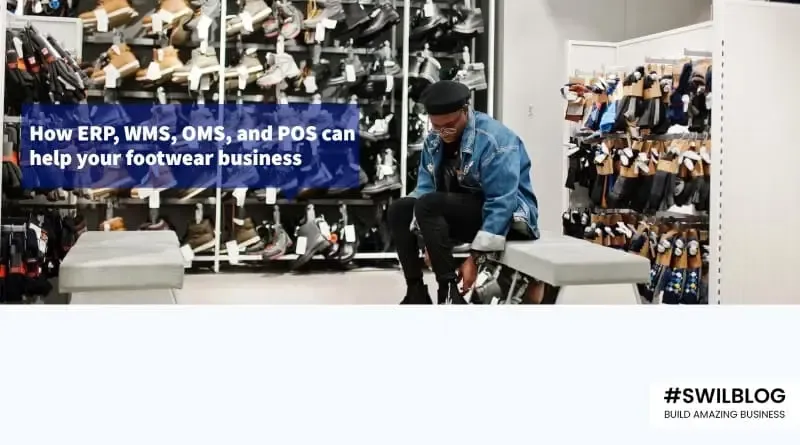
What is ERP? And its benefits for footwear brands
Enterprise resource planning systems are complete, integrated platforms. This can be used on-premises or in the cloud to manage all facets of distribution or production-based firms. ERP systems support all areas of financial management, human resources, supply chain management, and manufacturing, in addition to your basic accounting role.
ERP systems will also provide transparency throughout the entire business process by keeping track of all aspects of manufacturing, logistics, and finance. Multiple departments can use these integrated systems. This serves as the organization's core hub for end-to-end processes and data.
ERP systems and software provide several functions for large, medium-sized, and small organizations, as well as industry-specific adaptations.
Benefits of ERP
By combining all business areas, such as procurement, inventory, production, operations, sales, accounting, and finance, across a single platform. ERP systems specifically created for footwear processing units address a variety of issues. These “information hubs” provide precise, timely information. This is essential to manufacturing and various processing procedures.
Manufacturers are looking to cut expenses, control growth, and streamline processes. And gaining a competitive edge over rivals can greatly profit from footwear ERP software.
It plans out every step of the production process, from obtaining the raw materials to cutting, stitching, and supplying a variety of patterns, colors, and textures to packing and distributing the finished product to the customer. Let's take a glance:
- Controls costs
- Waste minimization
- Shifting consumer demand
- Boosts inventory control
- Improved chain of distribution control
- Traceability in both directions
- Summarizing Ideas
- Observance of agreement
What is WMS? And its benefits for footwear brands
An enterprise can manage warehouse operations from the moment products or materials enter a warehouse. They use a warehouse management system (WMS), composed of software and procedures, until they leave. Because they store all of the items needed or generated in manufacturing and supply chain operations, from raw materials to completed goods, warehouses are at the center of these processes.
The purpose of a WMS is to make sure those materials and products are moved through warehouses most efficiently and cost-effectively. A WMS manages a variety of tasks, such as inventory tracking, picking, receiving, and putting away, that make these moves possible.
Additionally, a WMS offers visibility into an organization's inventory at any time and place, including while it is in transit at a facility.
Benefits of WMS
- Losses in money and reputation are caused by inventory shortages. After three unsuccessful purchase attempts, almost 70% of customers give up on the online site. The next step for retailers is to ensure that they have the best available view of their inventory and that they are in control of it.
- Stock-outs are one of the primary risks to profitability in the e-commerce market for clothing and footwear. According to international studies, the annual global losses are in the billions.
- Unrealized sales occur as a result of an insufficient supply that is out of step with consumer demand and drives up inventory holding costs. Getting rid of those extra items can be difficult; a merchant may even have to destroy them.
- According to calculations, the losses for online apparel and shoe businesses might amount to 10% of yearly sales.
- WMS systems are crucial in reducing the possibility of stock shortages. This may be a severe concern in the fashion industry, affecting the company’s profitability.
- The use of a warehouse management solution is a necessary first step in automating warehouse management. But the system also makes it possible to control the flow of each product in real-time and collect statistical data.
- This can be used to determine which products are most profitable for the business. And to adjust supply policies over the long term, increasing overall profitability.
- The WMS systems are crucial in reducing the danger of stock shortages. This is the fashion industry can be a serious issue that affects the company’s profitability.
What is OMS? And its Benefits for footwear brands
An OMS helps by streamlining and automating crucial steps in the purchase and fulfillment processes for both you and the consumer. An automated process is started for fulfillment after an order is placed and a delivery option is chosen.
OMS solutions facilitate speedy order fulfillment by facilitating shipment from the closest and/or most affordable location or setting up the product for in-store pickup. You can also manage other phases of the customer lifecycle, including returns by keeping an eye on inventory levels to prevent stock-outs and backorders.
OMS makes it possible for both your staff and consumers to view and follow each order from beginning to end. And it also makes it possible for you to assess the process' overall effectiveness.
Benefits of OMS
- An order management system is essential for footwear businesses to operate as efficiently as possible.
- With a 35% return rate, this is three times greater than that of general e-commerce. Footwear manufacturers require the tools to automate workflows that shorten the time spent updating payment, inventory, and customer communications, resulting in a more positive customer experience.
- Several benefits come with an OMS. Scaling is made simpler since more orders can be processed, more difficult decisions (such as where to ship to) can be automated, and fewer mistakes are made.
- When using a digital order management solution, it is simpler to communicate with suppliers, track orders, manage shipments, and cut down on backorders.
What is POS? And its benefits for footwear brands
Since it serves as both a point of sale and a point of return or client order, the point of sale is frequently referred to as the point of service. Software for POS terminals could additionally have capabilities for further functionality, including inventory control, CRM, accounting, or warehousing.
Benefits of POS
- POS software should provide an easy-to-use interface for quick and simple billing. This could improve the shopping experience for customers.
- Customer loyalty programs should be managed by POS software quickly and securely. Point redemption must be simple and protected by OTP confirmation.
- The POS software should be able to suggest things that the customer might be interested in based on his prior purchases. This will improve their ability to upsell.
- Retail shoe stores have a policy of either providing free or inexpensive warranty repairs for shoes. Such procedures should be manageable and traceable by POS software.
- Retailers of footwear must adhere to various industry-specific inventory management regulations. To separate the inventory for replenishment and to quickly arrange the items on the shelves in response to customer demand, barcode generation with the footwear criteria such as brand, color, variety, and style is crucial.
- Scalability is a crucial factor when choosing a POS system. When it expands, it should be able to handle the demands of the shoe stores.
Conclusion
To streamline various aspects of your business, you can use the ERP, WMS, OMS, and POS systems alone or in combination.
They manage a certain business function, but they essentially work in the same manner. They assist you in managing virtually every aspect of your business, from creating products to updating product details on various channels, placing orders, and managing warehouses and shipments.
You must determine which one, as a business, best meets your needs. And how to use them as separate or integrated systems for those needs.
More from the blog
 Distribution & Supply ChainGSTR-2B Reconciliation for Distributors: How to Protect Your ITC Before You File GSTR-3B
How distributors reconcile purchases with GSTR-2B before filing GSTR-3B, fix ITC mismatches, and keep books their CA can trust. India, 2026.
Read article Distribution & Supply ChainGoods Inward Done Right: Matching Every Purchase Order to the GRN in a Distribution Business
Booked one thing, received another? See how PO-to-GRN matching catches shortages, wrong rates and near-expiry stock at goods inward, in one core.
Read article Distribution & Supply ChainSecondary Sales Reporting for Distributors: How to Track Sell-Through Your Principals Can Trust
See real sell-through without a bolt-on DMS. How Indian distributors capture salesman and B2B orders and report secondary sales from one operational core.
Read article PharmacyManaging Expiry Returns in Pharma Distribution: How to Recover Value from Near-Expiry Stock
How pharma distributors handle near-expiry stock, saleable vs non-saleable returns, breakage claims and expiry credit notes without losing money or ITC.
Read article Distribution & Supply ChainMoving from Tally to a Distribution ERP: When You've Outgrown the Books
The honest signs a distributor has outgrown Tally, what a distribution ERP adds, and how to migrate in phases without stopping billing.
Read article Distribution & Supply ChainTablet-Based Picking in the Warehouse: How Device Setup Drives Real-Time Fulfilment Performance
Tablet picking lifts accuracy and live stock visibility, but only if the picker hardware fits the job. Device minimums, zone flows, and fixed-station picking wi…
Read article
- Distribution & Supply ChainGSTR-2B Reconciliation for Distributors: How to Protect Your ITC Before You File GSTR-3B
How distributors reconcile purchases with GSTR-2B before filing GSTR-3B, fix ITC mismatches, and keep books their CA can trust. India, 2026.
Read article - Distribution & Supply ChainGoods Inward Done Right: Matching Every Purchase Order to the GRN in a Distribution Business
Booked one thing, received another? See how PO-to-GRN matching catches shortages, wrong rates and near-expiry stock at goods inward, in one core.
Read article - Distribution & Supply ChainSecondary Sales Reporting for Distributors: How to Track Sell-Through Your Principals Can Trust
See real sell-through without a bolt-on DMS. How Indian distributors capture salesman and B2B orders and report secondary sales from one operational core.
Read article - PharmacyManaging Expiry Returns in Pharma Distribution: How to Recover Value from Near-Expiry Stock
How pharma distributors handle near-expiry stock, saleable vs non-saleable returns, breakage claims and expiry credit notes without losing money or ITC.
Read article - Distribution & Supply ChainMoving from Tally to a Distribution ERP: When You've Outgrown the Books
The honest signs a distributor has outgrown Tally, what a distribution ERP adds, and how to migrate in phases without stopping billing.
Read article - Distribution & Supply ChainTablet-Based Picking in the Warehouse: How Device Setup Drives Real-Time Fulfilment Performance
Tablet picking lifts accuracy and live stock visibility, but only if the picker hardware fits the job. Device minimums, zone flows, and fixed-station picking wi…
Read article