
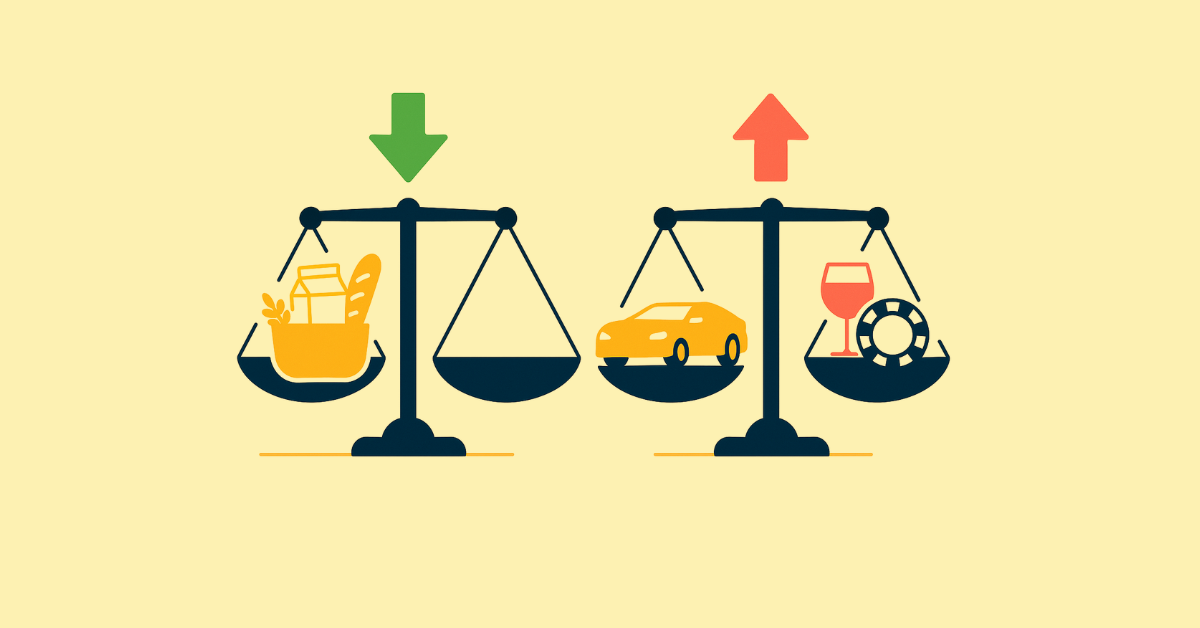
GST 2.0 changes created one of the biggest questions for every retailer, distributor, and consumer: “What actually becomes cheaper, and what gets costlier?”
The answer lies in the revised GST slab structure (5%, 18%, and 40%) and the product reclassification announced in the official notifications.
This guide explains those changes in plain language—what businesses must update in their systems and what customers will notice at the checkout counter.
Why Prices Shift Under GST 2.0 Changes

Price changes happen because:
Beyond slab changes, businesses must also account for transitional stock adjustments. Goods packed before the notification but sold afterward may require revised invoicing or credit notes. This creates operational challenges, especially for distributors who handle bulk inventory. ERP systems play a key role here by auto-updating tax rates across product masters, preventing manual errors, and ensuring bills align with the new GST structure.
- HSN codes were reassigned to new slabs.
- Inverted duty structures were corrected, reducing input costs.
- A new 40% slab was introduced for luxury and sin goods.
- Essentials and daily-use items moved into 5% or nil slabs.
Retailers must update ERP masters to reflect GST 2.0 changes.
Categories That Became Cheaper
🛒 Essentials & Daily Use Goods
- Many food staples and processed items shifted into the 5% slab.
- Certain personal care items (soaps, toothpaste, hair oils) moved to lower rates.
- Some packaged foods and beverages (earlier at 12% or 18%) now fall at 5%.
⚕️ Healthcare & Medicines
- Life-saving drugs, vaccines, medical equipment were moved to nil or reduced slabs.
- Pharmacies must revise billing and update ERP masters to pass on benefits.
🌱 Agriculture & Renewable Energy
- Fertilizers, farm machinery, renewable energy equipment saw duty corrections.
- Distributors may see improved margins or scope to lower selling prices.
Categories That Became Costlier
🚗 Luxury & Sin Goods (40% Slab)
- High-end cars, premium liquor, betting, gambling, casino services are now clearly at 40%.
- Retailers must immediately update invoice templates, pricing systems, and e-way bill documentation.
📺 Selected Electronics & Appliances
- Certain TVs, ACs, and small appliances had upward revisions.
- Bundled sales (appliance + warranty + service) must be split into separate invoice lines to avoid overtaxing.
🎭 Entertainment & Leisure Services
- Specific entertainment-related services moved into higher slabs.
- Businesses must communicate price changes upfront to customers.
Why Some Products Didn’t Change
Not all categories shifted. Many goods and services remain under 18%, which now functions as the “standard rate.”
👉 For these, businesses just need to confirm HSN mappings in product masters are correct.
What Businesses Must Do Now
- Retailers: Update shelf labels & POS. Post notices for reduced-rate items.
- Wholesalers & distributors: Issue updated dealer price lists with new tax-inclusive prices.
- Manufacturers: Adjust MRPs on new packs; follow transitional relief for old stock.
- Service providers: Recheck contracts, invoices, and GST slabs in recurring billing.
The Consumer Perspective
From a customer’s viewpoint:
- 🛒 Grocery & pharmacy bills may get lighter due to reduced slabs.
- 📺 Electronics & luxury items will cost more with the new 40% category.
- 💼 Everyday services mostly unchanged, since they stay at 18%.
Key Takeaway
The GST 2.0 slab changes are not just a tax reform—they directly affect pricing strategy, margins, and consumer behavior. For both businesses and consumers, they reshape pricing strategy, affect margins, and influence buying decisions. Retailers and distributors who quickly align their ERP systems with the new slabs will not only stay compliant but also build customer trust by ensuring transparency. Those who delay risk confusion, billing mismatches, and even compliance penalties.
- Essentials & medicines → relief to households
- Luxury items → clearer premium cost
👉 For businesses, the urgent step is to synchronize product masters & price lists with new slabs so billing, reporting, and compliance remain accurate.
More from the blog
 Distribution & Supply ChainGSTR-2B Reconciliation for Distributors: How to Protect Your ITC Before You File GSTR-3B
How distributors reconcile purchases with GSTR-2B before filing GSTR-3B, fix ITC mismatches, and keep books their CA can trust. India, 2026.
Read article Distribution & Supply ChainGoods Inward Done Right: Matching Every Purchase Order to the GRN in a Distribution Business
Booked one thing, received another? See how PO-to-GRN matching catches shortages, wrong rates and near-expiry stock at goods inward, in one core.
Read article Distribution & Supply ChainSecondary Sales Reporting for Distributors: How to Track Sell-Through Your Principals Can Trust
See real sell-through without a bolt-on DMS. How Indian distributors capture salesman and B2B orders and report secondary sales from one operational core.
Read article PharmacyManaging Expiry Returns in Pharma Distribution: How to Recover Value from Near-Expiry Stock
How pharma distributors handle near-expiry stock, saleable vs non-saleable returns, breakage claims and expiry credit notes without losing money or ITC.
Read article Distribution & Supply ChainMoving from Tally to a Distribution ERP: When You've Outgrown the Books
The honest signs a distributor has outgrown Tally, what a distribution ERP adds, and how to migrate in phases without stopping billing.
Read article Distribution & Supply ChainTablet-Based Picking in the Warehouse: How Device Setup Drives Real-Time Fulfilment Performance
Tablet picking lifts accuracy and live stock visibility, but only if the picker hardware fits the job. Device minimums, zone flows, and fixed-station picking wi…
Read article
- Distribution & Supply ChainGSTR-2B Reconciliation for Distributors: How to Protect Your ITC Before You File GSTR-3B
How distributors reconcile purchases with GSTR-2B before filing GSTR-3B, fix ITC mismatches, and keep books their CA can trust. India, 2026.
Read article - Distribution & Supply ChainGoods Inward Done Right: Matching Every Purchase Order to the GRN in a Distribution Business
Booked one thing, received another? See how PO-to-GRN matching catches shortages, wrong rates and near-expiry stock at goods inward, in one core.
Read article - Distribution & Supply ChainSecondary Sales Reporting for Distributors: How to Track Sell-Through Your Principals Can Trust
See real sell-through without a bolt-on DMS. How Indian distributors capture salesman and B2B orders and report secondary sales from one operational core.
Read article - PharmacyManaging Expiry Returns in Pharma Distribution: How to Recover Value from Near-Expiry Stock
How pharma distributors handle near-expiry stock, saleable vs non-saleable returns, breakage claims and expiry credit notes without losing money or ITC.
Read article - Distribution & Supply ChainMoving from Tally to a Distribution ERP: When You've Outgrown the Books
The honest signs a distributor has outgrown Tally, what a distribution ERP adds, and how to migrate in phases without stopping billing.
Read article - Distribution & Supply ChainTablet-Based Picking in the Warehouse: How Device Setup Drives Real-Time Fulfilment Performance
Tablet picking lifts accuracy and live stock visibility, but only if the picker hardware fits the job. Device minimums, zone flows, and fixed-station picking wi…
Read article