
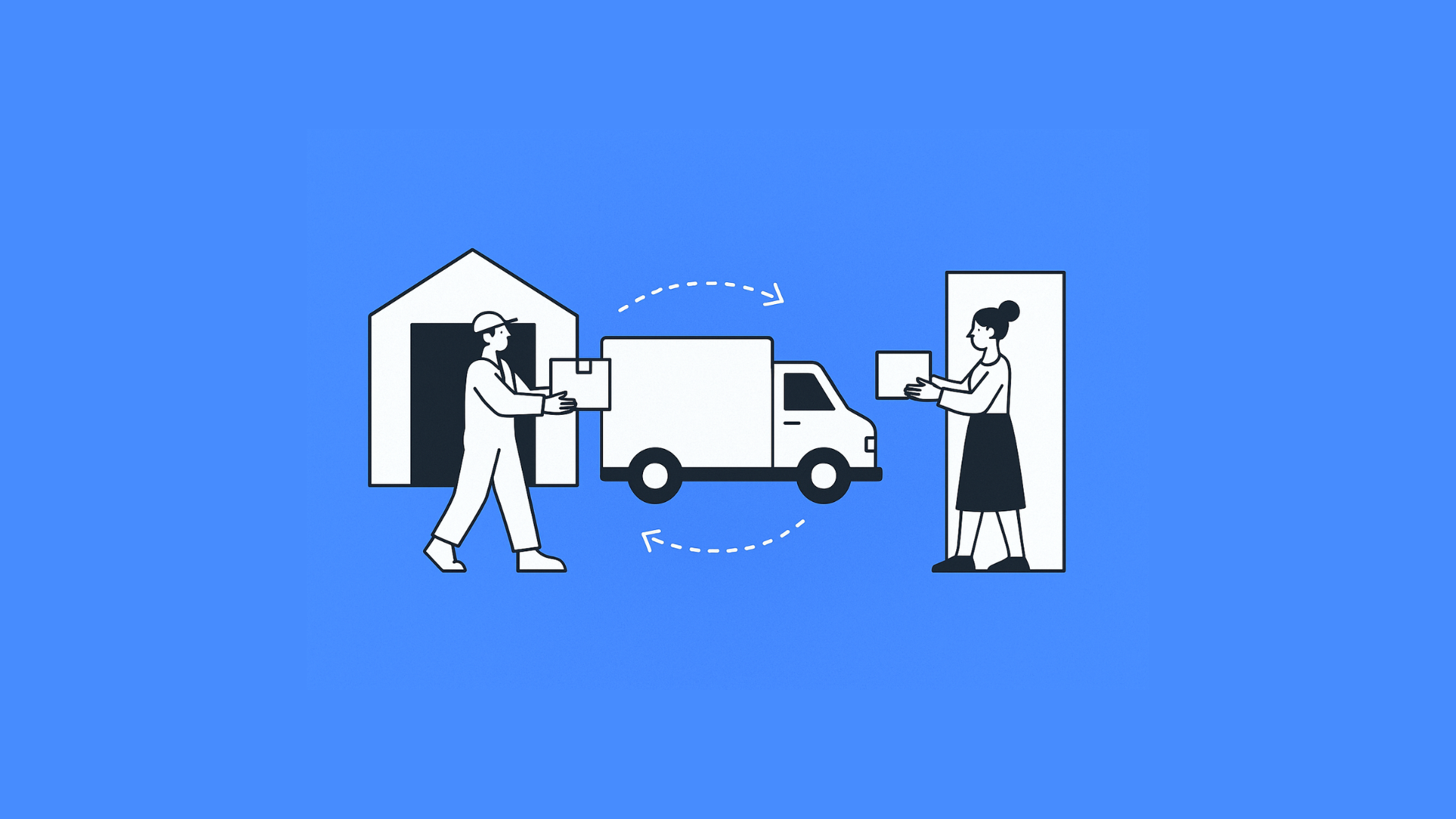
Order fulfillment—covering everything from receiving an order to delivering it—is the lifeblood of any product-based business. When done well, it drives customer satisfaction, repeat sales, and a strong brand reputation. When done poorly, it leads to unhappy customers, rising costs, and operational chaos.
A clear, documented process for fulfillment, delivery, and dispatch ensures that every team member knows their role, every package moves swiftly, and every customer receives accurate information. In this blog, we’ll explore:
- What does “order fulfillment” means
- Common challenges without a process
- Core steps in a robust fulfillment workflow
- Key metrics to track
- How delivery and dispatch fit in
- Technology’s role
- Real-world examples
- Best practices and takeaways
By the end, you’ll grasp why a formalized process is not optional—it’s essential for growth, efficiency, and customer loyalty.
1. Defining Order Fulfillment, Dispatch, and Delivery
Order Fulfillment
Order fulfillment is the end-to-end sequence that turns a customer’s order into a parcel on their doorstep. It typically includes:
- Order receipt (capturing the order in your system)
- Inventory management (reserving stock, updating counts)
- Picking (locating items in the warehouse)
- Packing (correctly and safely boxing items)
- Labeling (printing shipping labels, paperwork)
Dispatch
Dispatch refers to the handoff point where packed orders leave your warehouse or store to go into the delivery network. It involves:
- Route planning (assigning orders to carriers or drivers)
- Loading vehicles (optimizing space, verifying contents)
- Documentation (proof of dispatch, manifests)
Delivery
Delivery covers the final mile—getting the package from the carrier’s hub to the customer’s address. It includes:
- Tracking and communication (sending updates to customers)
- Handling exceptions (address not found, delivery failed)
- Proof of delivery (signatures, photos)
When these three stages connect seamlessly, customers receive their orders on time, intact, and informed at every step.
2. The Cost of Operating Without a Formal Process

Many small and mid-sized businesses start out fulfilling orders ad hoc—using spreadsheets, notes, or memory. As volumes grow, this approach breaks down:
- Increased Errors: Wrong items picked, orders lost, or shipments mislabeled.
- Inventory Inaccuracy: Stock levels drift, leading to overselling or deadstock.
- Delayed Shipments: Without clear steps, orders sit unprocessed, causing late deliveries.
- Customer Complaints: Lack of tracking or communication frustrates buyers.
- Rising Costs: Wasted labor hours correcting mistakes, expedited shipping fees, and returns handling.
A research survey found that businesses with informal processes saw a 25% higher rate of pick-pack errors and a 15% increase in customer support tickets related to shipping issues. Over time, these costs spiral, harming profitability and reputation.
3. Core Steps in a Robust Fulfillment Workflow
A structured fulfillment process standardizes best practices and reduces reliance on individual memory. Here’s a recommended workflow:

1. Order Capture & Validation
- Automate order import from e-commerce, POS, and marketplaces.
- Validate product availability: Check stock levels instantly.
- Flag exceptions: backorders, cancellations, or high-risk payments.
2. Inventory Management & Replenishment
- Real-time stock updates: Use a warehouse management system (WMS).
- Cycle counts: Regularly audit subsets of inventory to catch errors early.
- Automatic reorder points: Trigger purchase orders when levels drop below thresholds.
3. Picking
- Batch picking: Group orders by zone to minimize walking.
- Pick-by-scan: Use barcode scanners to confirm each item.
- Quality checks: Weigh items or scan test picks to catch mis-picks immediately.
4. Packing
- Standard packing protocols: Use the right box size and void fill for protection.
- Kit assembly: For multi-item bundles, follow a “recipe” to ensure completeness.
- Label generation: Print shipping labels and packing slips automatically from your system.
5. Dispatch Scheduling & Loading
- Carrier integration: Connect with carriers (UPS, DHL, local couriers) to pull rates and schedules.
- Route optimization: Use software to plan driver routes or batch shipments by zone.
- Loading docks: Assign dock doors and staging areas to avoid mix-ups.
6. Delivery Tracking & Communication
- Real-time tracking links: Send SMS/email updates at dispatch, in-transit, and out-for-delivery stages.
- Self-service portals: Let customers reschedule deliveries or leave special instructions.
- Exception management: Define workflows for address corrections, failed attempts, or damaged goods.
7. Returns & Reverse Logistics
- Easy returns process: Include pre-paid labels or QR codes in shipments.
- Inspection workflows: Route returns to quality control for restocking or disposal.
- Refund/Exchange Automation: Trigger financial reconciliations once returns are approved.
This end-to-end workflow ensures orders move smoothly and errors are caught early, reducing the need for reactive firefighting.
4. Measuring Success: Key Fulfillment & Delivery Metrics
To continuously improve, track these critical performance indicators (KPIs):
Metric
Why It Matters
Benchmark
Order Accuracy Rate
% of orders shipped without error
≥ 99%
Order Cycle Time
Hours/days from order placement to dispatch
≤ 24–48 hours
On-Time Dispatch Rate
% of orders dispatched by promised date/time
≥ 95%
On-Time Delivery Rate
% of orders delivered within the promised window
≥ 90%
Pick-Pack Labor Cost per Order
Labor cost divided by the number of orders
Industry: $1–$6 per order*
Return Rate
% of orders returned
< 5%
Customer Satisfaction Score
Survey or CSAT rating
≥ 4.5 out of 5
* Varies by product type, order complexity, and region.
Use these KPIs to set targets, identify bottlenecks, and justify investments in people or technology.
5. The Role of Dispatch & Delivery in Customer Experience
While fulfillment ensures the right product is ready, dispatch and delivery shape how customers feel about your brand:
- Transparency Builds Trust
- Real-time tracking reduces inquiries.
- Proactive alerts for delays turn frustration into appreciation.
- Speed Drives Loyalty
- Fast dispatch (same-day or next-day) increases repeat purchase rates.
- Offering multiple delivery speeds (economy, express) caters to varying customer needs.
- Flexibility Reduces Friction
- Letting customers select delivery windows or pickup locations improves convenience.
- Simple rescheduling or holds at local depots enhance satisfaction.
- Handling Exceptions Gracefully
- Quick resolution of failed deliveries or lost packages turns potential complaints into positive reviews.
- An empowered support team with visibility into fulfillment data can solve issues immediately.
A study showed that 78% of consumers are more likely to reorder from retailers who provide excellent delivery experiences. This highlights how critical the dispatch and delivery stages are to revenue growth.
6. Technology as an Enabler
Modern fulfillment relies on integrated technology. Key systems include:
- Warehouse Management Systems (WMS): Controls inventory, picking, and packing workflows with real-time data.
- Order Management Systems (OMS): Consolidates orders from all channels and orchestrates fulfillment.
- Transportation Management Systems (TMS): Optimizes carrier selection, routing, and shipment tendering.
- Cloud Platforms: Provide centralized, accessible inventory and order data for dispersed teams.
- Mobile Scanning Devices: Enable accurate barcode scanning for picking, packing, and cycle counting.
- Carrier APIs & Webhooks: Automate rate shopping, label printing, and tracking updates.
Investing in these tools removes manual steps, cuts errors, and provides visibility—essential for scaling fulfillment operations.
7. Real-World Examples
A. D2C Apparel Brand
A mid-sized clothing company struggled with delayed shipments and high return rates due to incorrect orders. After implementing a WMS integrated with their e-commerce platform, they:
- Increased order accuracy from 94% to 99.5%
- Reduced cycle time from 72 to 24 hours
- Cut return-related support tickets by 40%
B. Subscription Box Service
A subscription snack box service needed predictable monthly dispatch. They adopted an OMS + TMS solution to plan carrier batches and automated customer notifications. Results:
- 98% on-time dispatchs for monthly shipments
- 90% reduction in manual tracking emails
- 15% uplift in subscriber retention
C. Local Retail Chain
A regional retail chain with BOPIS (Buy Online, Pickup In Store) struggled with in-store pickup confusion. They rolled out a unified inventory and order portal, along with mobile devices for store staff. Outcomes:
- 85% faster pickup turnaround time
- 30% fewer customer complaints about pickup
- 20% increase in add-on sales at pickup counters
These cases illustrate the impact of formal processes and technology on fulfillment success.
8. Common Pitfalls & How to Avoid Them
Even with a process, businesses can stumble. Watch out for:
Pitfall
Solution
Siloed Systems
Integrate WMS, OMS, TMS, and e-commerce platforms
Inconsistent Data
Automate stock updates and cycle counts
Under-trained Staff
Provide regular training, manuals, and SOP reviews
Ignoring Exception Handling
Define clear workflows for delays, damages, and returns
Over-reliance on Manual Checks
Shift to automated validation (barcode scans, weights)
Lack of Continuous Improvement
Review KPIs monthly and implement process updates
Addressing these pitfalls ensures your fulfillment continues to improve.
9. Best Practices & Takeaway Checklist
Use this checklist to audit and refine your fulfillment, dispatch, and delivery process:

- Document Every Step: Create clear SOPs for order capture, picking, packing, dispatch, and delivery.
- Automate Where Possible: Barcode scanning, label printing, order import, and tracking updates.
- Integrate Systems: Connect your WMS, OMS, TMS, and e-commerce platform.
- Train Continuously: Hold quarterly training on processes, devices, and new features.
- Monitor KPIs: Track order accuracy, cycle time, on-time dispatch, and delivery rates.
- Communicate Proactively: Send automated shipping updates and handle exceptions swiftly.
- Review & Iterate: Schedule monthly or quarterly process reviews and make adjustments.
- Collect Feedback: Survey customers and staff to discover pain points and improvement ideas.
10. Conclusion
A structured, technology-enabled process for order fulfillment, dispatch, and delivery is not a luxury—it’s a necessity. By documenting clear workflows, automating critical steps, integrating best-of-breed systems, and monitoring performance, businesses can:
- Cut costs and waste
- Boost customer satisfaction and loyalty
- Scale operations without chaos
- Gain a competitive edge in fast-paced markets
Every package you ship is a reflection of your brand. Ensuring orders move smoothly from click to doorstep builds trust, reduces support overhead, and unlocks long-term growth.
Ready to transform your fulfillment process? Start by mapping your current workflow, identifying gaps against this guide, and planning incremental improvements. With the right process and technology in place, you’ll turn fulfillment into a strategic advantage rather than a daily headache.
More from the blog
 Distribution & Supply ChainGSTR-2B Reconciliation for Distributors: How to Protect Your ITC Before You File GSTR-3B
How distributors reconcile purchases with GSTR-2B before filing GSTR-3B, fix ITC mismatches, and keep books their CA can trust. India, 2026.
Read article Distribution & Supply ChainGoods Inward Done Right: Matching Every Purchase Order to the GRN in a Distribution Business
Booked one thing, received another? See how PO-to-GRN matching catches shortages, wrong rates and near-expiry stock at goods inward, in one core.
Read article Distribution & Supply ChainSecondary Sales Reporting for Distributors: How to Track Sell-Through Your Principals Can Trust
See real sell-through without a bolt-on DMS. How Indian distributors capture salesman and B2B orders and report secondary sales from one operational core.
Read article PharmacyManaging Expiry Returns in Pharma Distribution: How to Recover Value from Near-Expiry Stock
How pharma distributors handle near-expiry stock, saleable vs non-saleable returns, breakage claims and expiry credit notes without losing money or ITC.
Read article Distribution & Supply ChainMoving from Tally to a Distribution ERP: When You've Outgrown the Books
The honest signs a distributor has outgrown Tally, what a distribution ERP adds, and how to migrate in phases without stopping billing.
Read article Distribution & Supply ChainTablet-Based Picking in the Warehouse: How Device Setup Drives Real-Time Fulfilment Performance
Tablet picking lifts accuracy and live stock visibility, but only if the picker hardware fits the job. Device minimums, zone flows, and fixed-station picking wi…
Read article
- Distribution & Supply ChainGSTR-2B Reconciliation for Distributors: How to Protect Your ITC Before You File GSTR-3B
How distributors reconcile purchases with GSTR-2B before filing GSTR-3B, fix ITC mismatches, and keep books their CA can trust. India, 2026.
Read article - Distribution & Supply ChainGoods Inward Done Right: Matching Every Purchase Order to the GRN in a Distribution Business
Booked one thing, received another? See how PO-to-GRN matching catches shortages, wrong rates and near-expiry stock at goods inward, in one core.
Read article - Distribution & Supply ChainSecondary Sales Reporting for Distributors: How to Track Sell-Through Your Principals Can Trust
See real sell-through without a bolt-on DMS. How Indian distributors capture salesman and B2B orders and report secondary sales from one operational core.
Read article - PharmacyManaging Expiry Returns in Pharma Distribution: How to Recover Value from Near-Expiry Stock
How pharma distributors handle near-expiry stock, saleable vs non-saleable returns, breakage claims and expiry credit notes without losing money or ITC.
Read article - Distribution & Supply ChainMoving from Tally to a Distribution ERP: When You've Outgrown the Books
The honest signs a distributor has outgrown Tally, what a distribution ERP adds, and how to migrate in phases without stopping billing.
Read article - Distribution & Supply ChainTablet-Based Picking in the Warehouse: How Device Setup Drives Real-Time Fulfilment Performance
Tablet picking lifts accuracy and live stock visibility, but only if the picker hardware fits the job. Device minimums, zone flows, and fixed-station picking wi…
Read article