
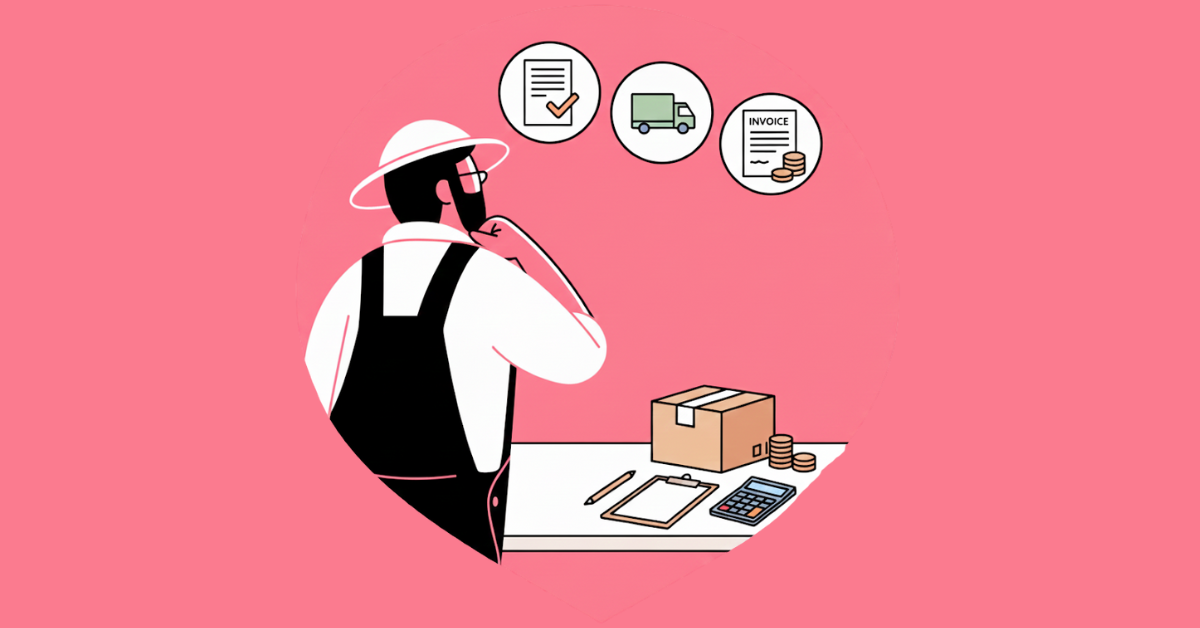
If you run a retail, wholesale, or distribution business, certain documents are part of your daily routine. Among the most common—and most confusing—are:
- Sales Order
- Sales Challan (Delivery Challan)
- Sales Invoice
They may sound similar, but they are not interchangeable.
Using the wrong document at the wrong time can quietly disrupt your inventory accuracy, GST compliance, and accounting records.
This article explains each document clearly, shows when to use it, and helps you understand how they work together in a real business workflow.
Why These Documents Matter
Sales orders, sales challans, and sales invoices are core business documents. Each one serves a specific purpose at a specific stage of the sales cycle.
When used correctly, they help businesses:
- Maintain accurate stock records
- Stay compliant with GST and accounting rules
- Reduce confusion between sales, dispatch, and accounts teams
- Improve customer trust and operational clarity
Whether you are a seller or a buyer, understanding these documents leads to clean, reliable, and professional transactions.
The Big Picture: A Sale Is a Process
A sale does not happen in a single step. It follows a journey:
Order → Dispatch → Billing

Each stage has its own document:
Stage
Document
Customer confirms purchase
Sales Order
Goods are dispatched
Sales Challan
Sale is completed and billed
Sales Invoice
Let’s look at each one in detail.
1. Sales Order – The Beginning of the Sale
A Sales Order is a confirmation of intent.
It confirms that the customer has agreed to buy specific items at agreed prices and terms.
In simple words, it means:
“Yes, the customer wants to buy these items under these conditions.”
Key Characteristics of a Sales Order
- Created before goods are dispatched
- Confirms quantity, pricing, and delivery terms
- Does not reduce stock
- Does not create GST liability
- Not a payment document
Simple Example
A retailer places an order for:
- 50 units of Item A
- Delivery scheduled for next week
You create a Sales Order to lock the deal.
At this stage, no stock moves and no tax is applied.
Why Sales Orders Are Important
- Prevent confusion during packing and dispatch
- Help plan inventory and delivery schedules
- Act as formal proof of customer commitment
- Reduce pricing and quantity disputes
What a Sales Order Typically Includes
- Customer details (name, address, contact information)
- Sales order number and order date
- Product details (items, quantities, unit prices)
- Delivery address and instructions
- Payment terms and special notes
2. Sales Challan – Movement of Goods
A Sales Challan, also called a Delivery Challan, is used when goods are physically moved from one place to another.
It acts as proof that goods have left your warehouse or store.
In simple words, it means:
“These goods are on the move.”
Key Characteristics of a Sales Challan
- Created at the time of dispatch
- Used for deliveries, samples, job work, or branch transfers
- Reduces stock
- Does not create GST liability (in most cases)
- Not a billing document
Common Use Cases
- Dispatching goods before invoicing
- Sending goods for approval or sampling
- Transferring stock between branches
- Sending goods for job work or repair
Think of It Like This
A sales challan is the note attached to a shipment listing what is inside the package, not how much the customer has to pay.
Why Sales Challans Matter
- Required for transportation compliance
- Prevent stock loss and dispatch errors
- Help track pending invoices
- Maintain accurate stock movement records
3. Sales Invoice – Completion of the Sale
A Sales Invoice is the final and most important financial document in the sales process.
It is generated after goods or services are supplied and acts as a legal request for payment.
In simple words, it means:
“The sale is complete. This is the amount payable, including tax.”
Key Characteristics of a Sales Invoice
- Created after (or along with) delivery
- Reduces stock
- Creates GST liability
- Recorded in accounting books
- Legally required for taxation and audits
What a Sales Invoice Includes
- Invoice number and date
- Seller and buyer details
- Product or service details
- Quantity, price, and total value
- GST and tax breakup
- Payment terms and due date
This document records:
- Revenue for the seller
- Expense or payable for the buyer
Simple Way to Remember the Difference
Stage
Document
Meaning
Before delivery
Sales Order
What the customer wants
During delivery
Sales Challan
What is being sent
After delivery
Sales Invoice
What must be paid
Quick memory trick:
📝 Order → 📦 Challan → 💰 Invoice
Why Understanding This Difference Is Critical
When businesses clearly separate these documents, they:
- Maintain clean and auditable records
- Avoid GST and compliance issues
- Reduce confusion between teams
- Improve order-to-cash efficiency
- Build more professional customer relationships
Mistakes like invoicing before dispatch or dispatching without challans often lead to cash flow issues, tax errors, and stock mismatches.
Final Thought
A smooth sales operation depends on clarity and discipline.
- Sales Order sets expectations
- Sales Challan tracks movement
- Sales Invoice completes the transaction
When each document is used correctly, your business runs faster, cleaner, and more reliably—with fewer disputes and better control.
More from the blog
 Distribution & Supply ChainGSTR-2B Reconciliation for Distributors: How to Protect Your ITC Before You File GSTR-3B
How distributors reconcile purchases with GSTR-2B before filing GSTR-3B, fix ITC mismatches, and keep books their CA can trust. India, 2026.
Read article Distribution & Supply ChainGoods Inward Done Right: Matching Every Purchase Order to the GRN in a Distribution Business
Booked one thing, received another? See how PO-to-GRN matching catches shortages, wrong rates and near-expiry stock at goods inward, in one core.
Read article Distribution & Supply ChainSecondary Sales Reporting for Distributors: How to Track Sell-Through Your Principals Can Trust
See real sell-through without a bolt-on DMS. How Indian distributors capture salesman and B2B orders and report secondary sales from one operational core.
Read article PharmacyManaging Expiry Returns in Pharma Distribution: How to Recover Value from Near-Expiry Stock
How pharma distributors handle near-expiry stock, saleable vs non-saleable returns, breakage claims and expiry credit notes without losing money or ITC.
Read article Distribution & Supply ChainMoving from Tally to a Distribution ERP: When You've Outgrown the Books
The honest signs a distributor has outgrown Tally, what a distribution ERP adds, and how to migrate in phases without stopping billing.
Read article Distribution & Supply ChainTablet-Based Picking in the Warehouse: How Device Setup Drives Real-Time Fulfilment Performance
Tablet picking lifts accuracy and live stock visibility, but only if the picker hardware fits the job. Device minimums, zone flows, and fixed-station picking wi…
Read article
- Distribution & Supply ChainGSTR-2B Reconciliation for Distributors: How to Protect Your ITC Before You File GSTR-3B
How distributors reconcile purchases with GSTR-2B before filing GSTR-3B, fix ITC mismatches, and keep books their CA can trust. India, 2026.
Read article - Distribution & Supply ChainGoods Inward Done Right: Matching Every Purchase Order to the GRN in a Distribution Business
Booked one thing, received another? See how PO-to-GRN matching catches shortages, wrong rates and near-expiry stock at goods inward, in one core.
Read article - Distribution & Supply ChainSecondary Sales Reporting for Distributors: How to Track Sell-Through Your Principals Can Trust
See real sell-through without a bolt-on DMS. How Indian distributors capture salesman and B2B orders and report secondary sales from one operational core.
Read article - PharmacyManaging Expiry Returns in Pharma Distribution: How to Recover Value from Near-Expiry Stock
How pharma distributors handle near-expiry stock, saleable vs non-saleable returns, breakage claims and expiry credit notes without losing money or ITC.
Read article - Distribution & Supply ChainMoving from Tally to a Distribution ERP: When You've Outgrown the Books
The honest signs a distributor has outgrown Tally, what a distribution ERP adds, and how to migrate in phases without stopping billing.
Read article - Distribution & Supply ChainTablet-Based Picking in the Warehouse: How Device Setup Drives Real-Time Fulfilment Performance
Tablet picking lifts accuracy and live stock visibility, but only if the picker hardware fits the job. Device minimums, zone flows, and fixed-station picking wi…
Read article