
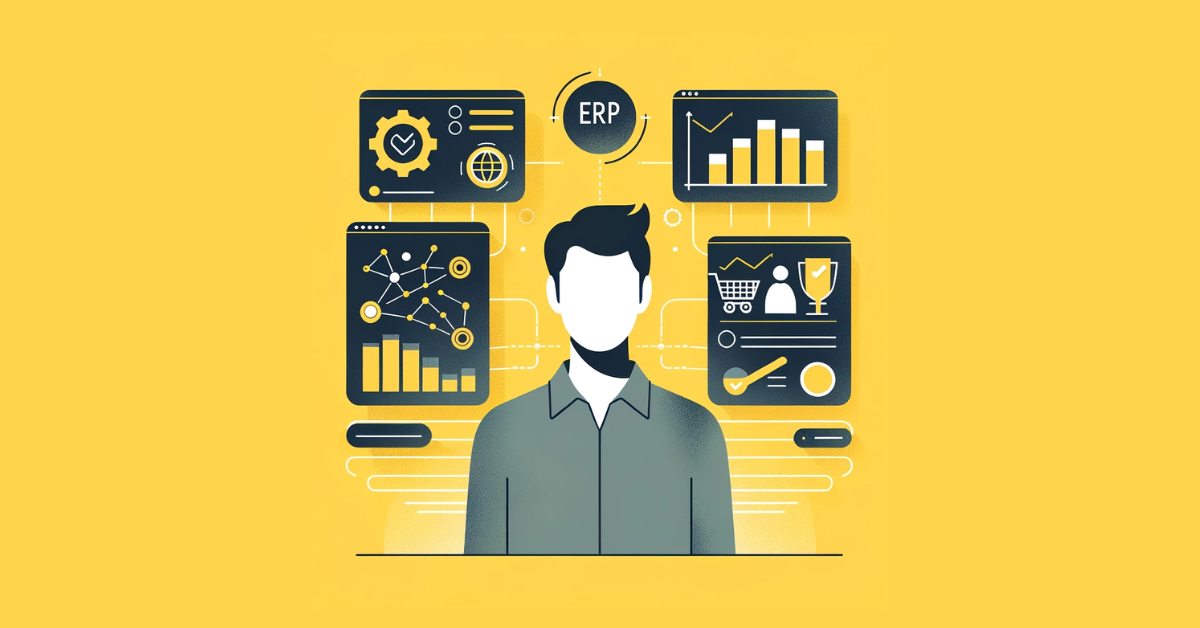
Technology is changing and developing quickly right now. All sectors want to retain and follow the status quo to promote their enterprises. Grocery shops and other retail businesses must also modify and enhance their operations.
Due to technological innovation, ERP systems for grocery businesses might help modernize their operations for increased efficiency and profitability. You can manage various grocery shop activities using the finest ERP software.
You are starting with inventory and procurement management and progressing to retail operations monitoring, tailored marketing, and client loyalty. Using retail software may improve the effectiveness and efficiency of all processes and operations in grocery stores. After reading this article, you will fully comprehend the benefits of ERP systems for grocery companies.
8 Reasons for Grocery Stores Using ERP
As previously indicated, the retail sector must modify its system to take advantage of current innovations.
Swil can provide grocery stores with a modern system for overseeing and managing all operations. It also offers several additional benefits that could increase the effectiveness and efficiency of labor. Use retail software for the following reasons:
1. Affordability
The advantage of cloud ERP is that it can be managed without spending money on staff and equipment. You save time, money, and space as you need to rent the service and infrastructure. If you choose the on-prem option, you must update your hardware every four to five years.
Since it constantly expands, the retail sector requires additional room to handle its assets. It would be a headache to purchase more hardware, employ more people, and incur extra maintenance costs. Cloud ERP is much less expensive than an on-premises system.
2. Data Protection
To further secure the data, cloud ERP has an encryption option. The private information is converted into ciphers that need a decryption key to be cracked. It would be expensive to ask cloud service providers to encrypt your company's entire database since doing so would require much processing power.
As an alternative, cloud ERP service providers provide inexpensive services and use less processing power. Alternatively, encrypt your data before sending it to the cloud.
3. Flexibility
One of the sectors that are changing quickly is retail. Scalability, earnings, sales rate, and other factors are all subject to change. A cloud-based ERP system is the ideal option as a result. You may easily manage the cloud ERP functionalities depending on your company's requirements.
4. More Customer Satisfaction
The cloud offers interaction across all primary retail sales channels, whether physical or online. It encourages improved departmental cooperation and gives customers broader access to a more comprehensive selection of goods.
Thanks to cloud ERP, all retail company sectors can access the item's product, size, stock, and channel data at any time and from any location. It gives your clients a more customized and improved buying experience.
5. Product Innovation that Works
Change and innovation are the two practical strategies for remaining competitive in the retail sector. Even when not on the premises, company owners may monitor their best- and worst-selling products thanks to cloud-based ERP systems.
They control the options and product categories they showcase in their shop. When you need to manage numerous branches, this technique is beneficial. By doing this, you may easily compete with your rivals in the retail products industry.
6. Data Protection in the Case of an Emergency
A disaster recovery strategy and equipment specially designed to avoid data loss are included in cloud ERP. Cloud service providers take rapid steps to restore full-service access with the least disruption in the event of a catastrophe such as a fire, flood, etc. The monthly rates charged by cloud service providers include the DR service.
7. Use Anytime & Anywhere
You can only access the data or program on that specific machine while using the ERP software on an ordinary PC. However, if you move to cloud-based ERP, you'll have access to the program anytime and from any place. You must control the workers' access privileges, the services you have paid for, etc.
It allows workers to access data, interact in real-time, and work from any place. Promotes geographic freedom in cloud ERP. Regarding merchants, cloud ERP offers specialized restriction features that let them manage data access.
8. Visibility of Data in Real Time
You may get real-time status updates with cloud ERP from any location. Even when you aren't physically present at the shop, you can still manage inventories, keep track of deliveries, gather inventory movement data, and examine supply chain bottlenecks.
Such a feature is quite helpful when managing a network of retail locations. You can work for your company with the cloud without dealing with missed deliveries, inaccurate inventory, or stock-outs.
Conclusion
The retail sector must keep up with technology innovation to expand its company. Software may be used to operate a retail establishment like a grocery shop. Using grocery shop ERP systems like Swil might streamline and improve the efficiency of all retail operations and activities.
It is feasible to accurately and successfully manage inventory, promotions, and outlet operations. Making informed decisions that will aid the firm in the long term also comes from creating accurate reports. To discuss your company's requirements with our business experts, contact us.
More from the blog
 Distribution & Supply ChainGSTR-2B Reconciliation for Distributors: How to Protect Your ITC Before You File GSTR-3B
How distributors reconcile purchases with GSTR-2B before filing GSTR-3B, fix ITC mismatches, and keep books their CA can trust. India, 2026.
Read article Distribution & Supply ChainGoods Inward Done Right: Matching Every Purchase Order to the GRN in a Distribution Business
Booked one thing, received another? See how PO-to-GRN matching catches shortages, wrong rates and near-expiry stock at goods inward, in one core.
Read article Distribution & Supply ChainSecondary Sales Reporting for Distributors: How to Track Sell-Through Your Principals Can Trust
See real sell-through without a bolt-on DMS. How Indian distributors capture salesman and B2B orders and report secondary sales from one operational core.
Read article PharmacyManaging Expiry Returns in Pharma Distribution: How to Recover Value from Near-Expiry Stock
How pharma distributors handle near-expiry stock, saleable vs non-saleable returns, breakage claims and expiry credit notes without losing money or ITC.
Read article Distribution & Supply ChainMoving from Tally to a Distribution ERP: When You've Outgrown the Books
The honest signs a distributor has outgrown Tally, what a distribution ERP adds, and how to migrate in phases without stopping billing.
Read article Distribution & Supply ChainTablet-Based Picking in the Warehouse: How Device Setup Drives Real-Time Fulfilment Performance
Tablet picking lifts accuracy and live stock visibility, but only if the picker hardware fits the job. Device minimums, zone flows, and fixed-station picking wi…
Read article
- Distribution & Supply ChainGSTR-2B Reconciliation for Distributors: How to Protect Your ITC Before You File GSTR-3B
How distributors reconcile purchases with GSTR-2B before filing GSTR-3B, fix ITC mismatches, and keep books their CA can trust. India, 2026.
Read article - Distribution & Supply ChainGoods Inward Done Right: Matching Every Purchase Order to the GRN in a Distribution Business
Booked one thing, received another? See how PO-to-GRN matching catches shortages, wrong rates and near-expiry stock at goods inward, in one core.
Read article - Distribution & Supply ChainSecondary Sales Reporting for Distributors: How to Track Sell-Through Your Principals Can Trust
See real sell-through without a bolt-on DMS. How Indian distributors capture salesman and B2B orders and report secondary sales from one operational core.
Read article - PharmacyManaging Expiry Returns in Pharma Distribution: How to Recover Value from Near-Expiry Stock
How pharma distributors handle near-expiry stock, saleable vs non-saleable returns, breakage claims and expiry credit notes without losing money or ITC.
Read article - Distribution & Supply ChainMoving from Tally to a Distribution ERP: When You've Outgrown the Books
The honest signs a distributor has outgrown Tally, what a distribution ERP adds, and how to migrate in phases without stopping billing.
Read article - Distribution & Supply ChainTablet-Based Picking in the Warehouse: How Device Setup Drives Real-Time Fulfilment Performance
Tablet picking lifts accuracy and live stock visibility, but only if the picker hardware fits the job. Device minimums, zone flows, and fixed-station picking wi…
Read article