
Introduction
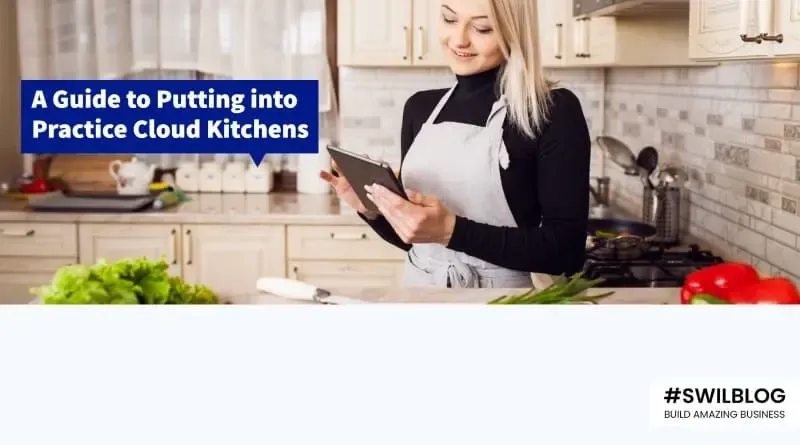
A ghost kitchen or virtual kitchens are other names for a cloud kitchen. Accepting food orders online is the idea behind this. People are connecting more conveniently and easily as a result of global development. A ghost kitchen or even satellite kitchens are some common names for a cloud kitchen. It provides several prospects for various
- Food businesses,
- Facilities, and
- Services involved in meal preparation.
The main goal is to carry out all meal orders put online and to manage delivery. There are no actual dining facilities, as the name would imply. People can place orders for their preferred cuisine on the websites of these kinds of kitchens.
The majority of people use websites like Zomato or Swiggy. Since these orders come from many geographic locations, just one point of sales(POS) software is required. Here is where the cloud kitchen is focused. The majority of homes and businesses are used to ordering food online. As a result, cloud kitchens are more common in India.
The number of cloud kitchens in India has increased as a result. There were approximately 5000 cloud kitchens in India in 2019, and after the covid period, the cloud kitchen sector rapidly increased. Collaboration with websites and apps for online food ordering gave cloud kitchens substantial growth. A cloud kitchen must be started and set up in several phases.
Article Content-
- The Different Types of Cloud Kitchens in India
- Developing a Cloud Kitchen: The Step-by-Step Guide
- Benefits of a Cloud Kitchen in India
- Conclusion
The Different Types of Cloud Kitchens in India
1. Independent cloud kitchens
These are small-scale cloud kitchens with a limited team of 4–5 workers and a limited menu. For an independent cloud kitchen, around 300 square feet are needed.
2. Virtual restaurants
The restaurants that are listed on the online food apps or websites serve as the virtual restaurant's operating environment. To make it easier for clients to receive meal deliveries, they use the kitchen restaurants as virtual kitchens.
3. Various-brands cloud kitchens
These are established on a detailed analysis of the residents' food habits.
4. Hybrid cloud kitchen
A cloud kitchen and a takeaway restaurant are both parts of this model.
Developing a Cloud Kitchen: The Step-by-Step Guide
To know how to start a cloud kitchen in India, you must understand
- The investments,
- The location,
- The licenses, and a
- Some other criteria, as is the case with every business.
Location
Location in the framework of a cloud kitchen involves
- Decent sanitary conditions,
- A constant supply of water, and
- An area with reasonable rent.
You should choose a location in which there will likely be a high demand for the kind of food you will be selling. Primary market research and geographical analysis are crucial for this. Understanding the area's demographics will help you better grasp the
- Age groupings,
- Food habits, and
- Preferences of the local population.
You'll be able to quickly draw crowds in a place that provides you with good visibility. You can choose a location with parking if you have the resources to do so, to attract customers who are on the go.
Licenses
Any commercial enterprise cannot be started without a license. The same remains unchanged for a cloud kitchen business. Obtaining several licenses is necessary during the first month of setting up a cloud kitchen.
These consist of
- The FSSAI license
- Registration for GST
- Health trade license issued by the local government
- Fire licenses
Kitchen appliances
The variety of kitchen appliances is one of the most fundamental necessities for any cloud kitchen. And this equipment is completely dependent on the cuisine or concept of your cloud kitchen. These are the sole items that equal the major cost of investment. There are several necessities, including
- A stove,
- Oven,
- Microwave,
- Deep freezers and if necessary,
- Refrigerators,
- Knives, etc.
Packaging
One of the biggest concerns when setting up a cloud is the packaging. No matter how tasty or well-prepared the food is, it won't sell successfully in the market if it isn't handled or packaged properly. The primary consideration when setting up a cloud kitchen must be proper packing.
Online Accessibility
You'll need stable internet, cell phones, and a good phone board line. You will need to be active online because the entire concept is based on a digital platform.
Marketing
It is essential to register your restaurants with food delivery services like
- Burrp,
- Zomato, and
- Swiggy
Because they have thousands of clients who use them. You can post details about your location, your menu, food images, and more to social media accounts like
- Facebook,
- Twitter,
- Instagram and others to place advertisements.
Staffs
One of the most important steps in setting up a cloud kitchen is choosing a staff member for the kitchen. Although only a few staff is needed, you must make sure they are qualified, efficient, and have the necessary skills to manage the continual smooth operation of your cloud kitchen.
Benefits of a Cloud Kitchen in India
There are several factors contributing to the rapid growth of the Cloud kitchen business. These consist of:
Low-cost Start-Up
A low setup cost is offered by the kitchen. There are no significant costs associated with setting up the location. You might need to invest in a welcoming and comfortable interior, as long as the location is suitable.
Low overhead costs
A Cloud Kitchen incurs fewer overhead expenses compared to other traditional kitchens, which must pay taxes and deal with hefty maintenance costs.
In-demand Margin
In comparison to other restaurants, the overhead, labor, and general maintenance costs are lower in the virtual kitchen known as The Cloud Kitchen. This results in a significantly larger total profit margin.
Convenient Expansion
The Cloud Kitchen offers the possibility to expand your market according to your preferences without incurring additional expenses or requiring further planning. A cloud kitchen business can grow more easily because they are virtual kitchens that are entirely dependent on online meal ordering websites and applications.
Reduced Labor Costs
In comparison to restaurants or other traditional kitchens, where labor expenses are expensive, coupled with maintenance costs and tax facilities. Cloud kitchens are particularly advantageous in that they have a minimal labor cost.
Conclusion
One of the most popular businesses in both India and the rest of the world is the cloud kitchen business. The cloud kitchen is a business concept where operations can be successfully handled daily with a modest infrastructure and a small team of competent workers. Using management and cooking skills, a company can be established to deliver cuisines to customers via an online food ordering platform. This article should have made it clear that the requirements are not exceptionally hard.
More from the blog
 PharmacyManaging Expiry Returns in Pharma Distribution: How to Recover Value from Near-Expiry Stock
How pharma distributors handle near-expiry stock, saleable vs non-saleable returns, breakage claims and expiry credit notes without losing money or ITC.
Read article Distribution & Supply ChainMoving from Tally to a Distribution ERP: When You've Outgrown the Books
The honest signs a distributor has outgrown Tally, what a distribution ERP adds, and how to migrate in phases without stopping billing.
Read article Distribution & Supply ChainTablet-Based Picking in the Warehouse: How Device Setup Drives Real-Time Fulfilment Performance
Tablet picking lifts accuracy and live stock visibility, but only if the picker hardware fits the job. Device minimums, zone flows, and fixed-station picking wi…
Read article Distribution & Supply ChainHow to Control Outstanding Payments in a Distribution Business
Cut overdue receivables in your distribution business with credit limits, party-wise ageing and collection follow-ups in one ledger. An India-first guide.
Read article Distribution & Supply ChainSwilPOS for Field Operations: Tablet POS, Field Sales & Delivery Fulfilment in One App
Field sales on one app, delivery proof on another, billing on a third. Here is how SwilPOS runs order-taking, dispatch, and tablet POS on a single ERP truth.
Read article Distribution & Supply ChainScheme Management for Distributors: How to Stop Losing Money on Manual Free-Goods and Slab Calculations
Free goods, slab discounts and manufacturer schemes break in manual billing. See how scheme management on one ERP core stops the margin leak.
Read article
- PharmacyManaging Expiry Returns in Pharma Distribution: How to Recover Value from Near-Expiry Stock
How pharma distributors handle near-expiry stock, saleable vs non-saleable returns, breakage claims and expiry credit notes without losing money or ITC.
Read article - Distribution & Supply ChainMoving from Tally to a Distribution ERP: When You've Outgrown the Books
The honest signs a distributor has outgrown Tally, what a distribution ERP adds, and how to migrate in phases without stopping billing.
Read article - Distribution & Supply ChainTablet-Based Picking in the Warehouse: How Device Setup Drives Real-Time Fulfilment Performance
Tablet picking lifts accuracy and live stock visibility, but only if the picker hardware fits the job. Device minimums, zone flows, and fixed-station picking wi…
Read article - Distribution & Supply ChainHow to Control Outstanding Payments in a Distribution Business
Cut overdue receivables in your distribution business with credit limits, party-wise ageing and collection follow-ups in one ledger. An India-first guide.
Read article - Distribution & Supply ChainSwilPOS for Field Operations: Tablet POS, Field Sales & Delivery Fulfilment in One App
Field sales on one app, delivery proof on another, billing on a third. Here is how SwilPOS runs order-taking, dispatch, and tablet POS on a single ERP truth.
Read article - Distribution & Supply ChainScheme Management for Distributors: How to Stop Losing Money on Manual Free-Goods and Slab Calculations
Free goods, slab discounts and manufacturer schemes break in manual billing. See how scheme management on one ERP core stops the margin leak.
Read article