
Schemes that survive purchase to sale
Principal slabs, bonuses, and free goods flow from inbound through billing so utilisation matches what finance and the principal expect — not a parallel scheme tracker.

Stockist Management Software
Principal schemes, FEFO batch discipline, retailer secondary reporting, and GST — without reconciling three spreadsheets every closing.
35,000+India & Nepal · Retail & wholesale




















Why it matters
Principal slabs, bonuses, and free goods flow from inbound through billing so utilisation matches what finance and the principal expect — not a parallel scheme tracker.
Godown-level batch visibility, FEFO discipline, and near-expiry alerts so dispatch, QA, and returns stay coherent when SKU and principal count both climb.
Retailer-wise secondary capture and reporting templates that match how pharma and FMCG principals ask for the month — fewer rejections and re-keying.
Workflow
One flow connects purchase schemes, godown batch logic, retailer billing, and principal reporting — so stock, schemes, and GST stay aligned.
Post principal invoices with batch and expiry. Schemes, bonuses, and free goods calculate on GRN so purchase value and closing stock already reflect what the principal promised.
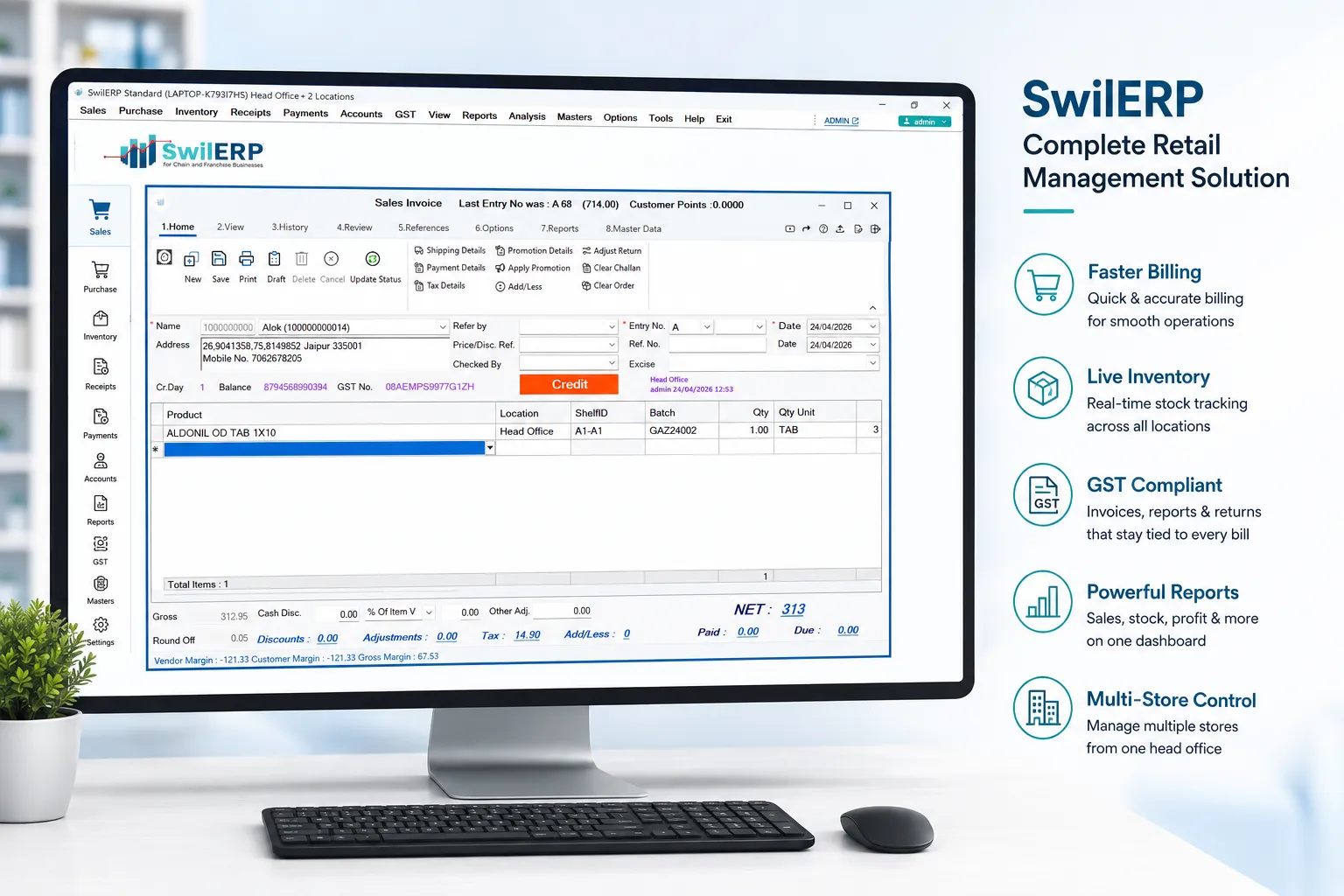
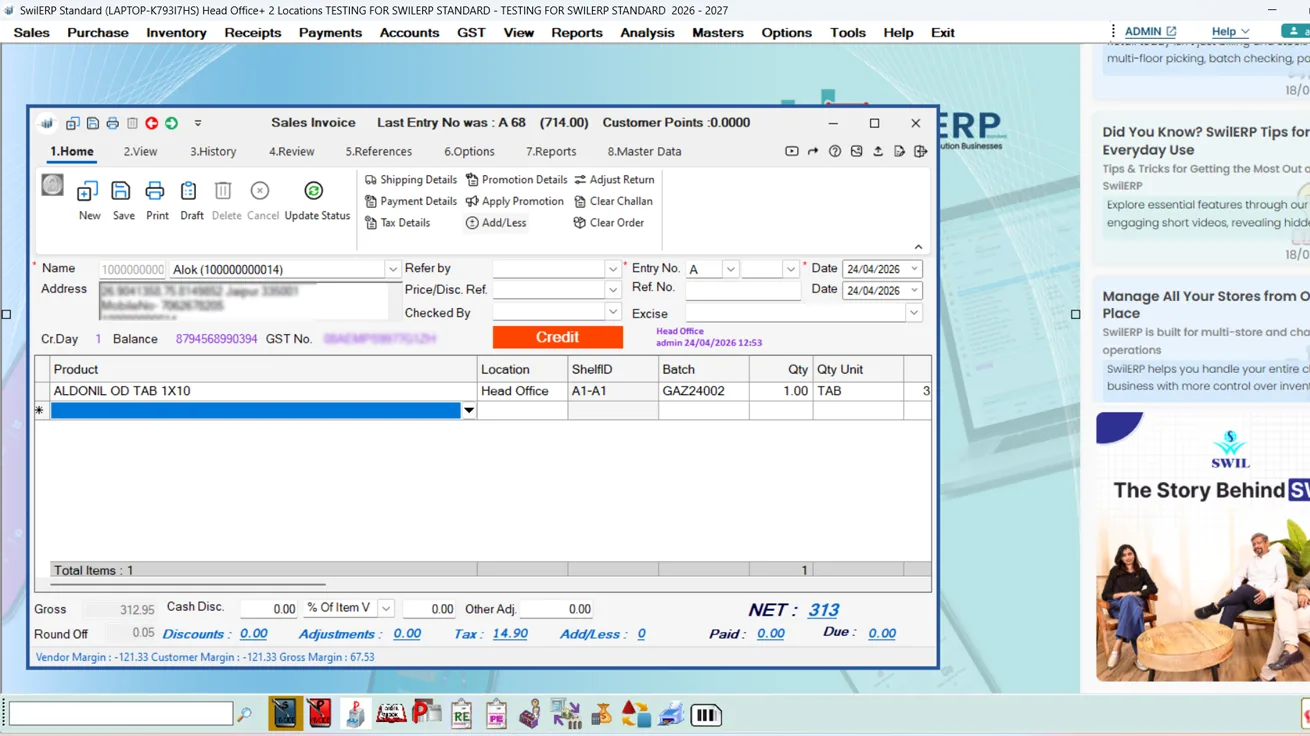
Sell to retailers with FEFO-friendly picks, party-wise pricing where you need it, and limits surfaced before stock leaves the godown — fewer wrong-batch dispatches and credit surprises.
Record retailer movement the way your trade works, tie receipts and outstanding to parties, and keep field and accounts on the same numbers for follow-up.
Generate secondary sales summaries, scheme utilisation, and expiry or return paperwork in formats principals recognise — without rebuilding the month in Excel.
Capabilities
Depth on schemes, batch stock, B2B billing, and reporting — without slowing the godown counter.
Receive, pick, and bill with batch references, expiry rules, and return-to-principal workflows so physical stock matches the ledger auditors see.
B2B tax invoices and credit or debit notes with batch detail where required, aligned to dispatch and e-way when the movement crosses thresholds.
Retailer-level movement, scheme-linked sell-through views, and exports your principals can plug into their review cycles.
Stock and transfers across locations with consolidated HQ views — so the stockist hub and satellite godowns tell one story at month-end.
Layer 3 · Guides
Regulated trade
Batch, expiry, stockist-friendly purchase and sale flows, and compliance-oriented reporting when principals audit your books.
Full network
Depot, route, and principal-reporting depth when your stockist operation sits inside a wider distribution footprint.
High velocity
Scheme-heavy, high-SKU FMCG motion with claims and route discipline alongside stockist billing and secondary capture.
SKU discipline
Reorder, valuation, and SKU hygiene across fast-moving lines so godown counts stay honest next to principal schemes.
Inside the godown
Structured inward, picking, and stock-take so physical batch stock reconciles with what invoicing already committed.
B2B overlap
Party-wise pricing, credit, and bulk B2B billing when your stockist desk also serves classic wholesale customers.
Powered by

The stockist stack SWIL ships every day — batch and expiry rigour, principal scheme capture, secondary sales reporting, and B2B billing your finance team can close on.
These answers focus on pharma and FMCG stockist operations on SwilERP: schemes, batch stock, secondary reporting, and GST. For pure wholesale volume plays, see the wholesale segment hub; for full distributor networks, start from distribution management.
Yes. You configure principals with their own scheme, slab, and free-goods rules. Purchase and sales workflows apply the right logic per principal so utilisation and closing stock stay traceable without parallel spreadsheets.
Inbound captures batch and expiry on GRN. Picking and billing can follow FEFO discipline with alerts for near-expiry stock, and returns to principals can be tracked batch-wise with matching debit and credit notes.
The software captures retailer-wise movement with product, batch, quantity, and value. You can structure exports and summaries to align with common pharma and FMCG principal templates — reducing reformatting after month close.
Yes. Per-party limits and outstanding can warn or block billing so dispatch and finance agree before stock leaves the godown — the same discipline wholesale teams use, tuned for stockist party books.
Where an invoice or challan meets e-way criteria, generation can be driven from the billing workflow using data already on the document — cutting portal copy-paste and mismatches on vehicle and value.
This page emphasises principal schemes, batch/expiry, and secondary sales reporting — the stockist sweet spot in pharma and FMCG. The wholesale hub stresses high-volume B2B pricing, multi-branch wholesale, and general trade billing; many businesses read both.
Flagship ERP, solution hubs, mobile apps, and demos—bookmarks that pair with every solution guide.
Start a free trial on your own masters, or talk to us about principals, godown layout, and GST setup before you go live.

45-day trial · No card required to start · Onboarding help for scheme rules, batch catalogue, and reporting formats
Proof from stockist floors
Teams balancing principal schemes, batch godowns, retailer credit, and secondary formats — without losing the thread between depot and accounts.
View all customer stories